
Anisodontea elegans
Anisodontea elegans (Cav.) D.M. Bates
Description
Sowing dates
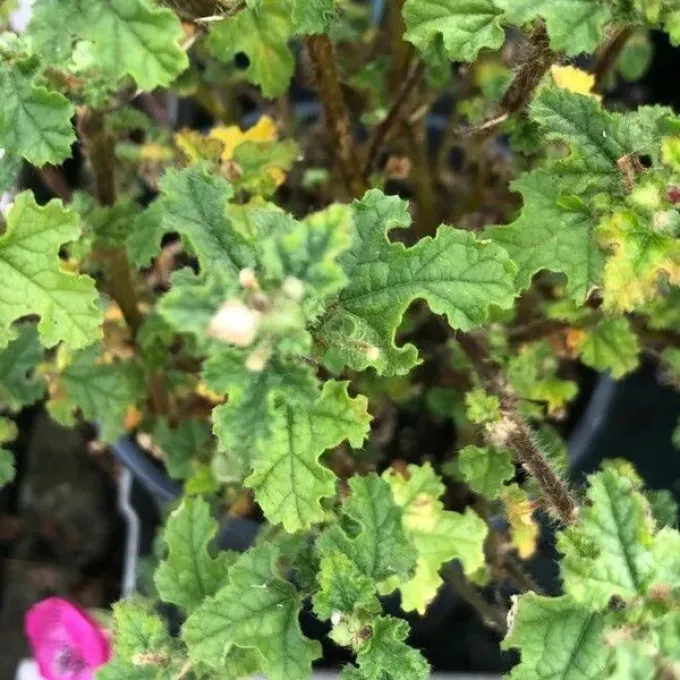
Anisodontea elegans is a perennial shrub belonging to the Malvaceae family, native to regions of South Africa, known for its elegant, mallow-like flowers.
Seeds should be sown indoors in late winter or early spring using a well-draining seed-starting mix to ensure successful germination.
Temperature control is essential during the germination phase, ideally maintained between 18 and 22 degrees Celsius in a bright, sheltered environment.
Seedlings should be hardened off gradually before transplanting them outdoors, once all danger of frost has passed in the spring.
For container gardening, planting can occur earlier provided the plants are kept in a greenhouse or sunroom until the weather stabilizes.
Growing requirements
This species thrives in full sun, which is critical for continuous blooming throughout the growing season.
The soil must be fertile, light, and exceptionally well-drained; heavy or waterlogged soils will inevitably lead to root damage.
Consistent moisture is required, but it is important to allow the top layer of the soil to dry slightly between watering cycles to prevent rot.
Regular feeding with a balanced liquid fertilizer is recommended to support the plant's high metabolic rate during its active flowering period.
Pruning is a necessary cultural practice to maintain a compact, bushy shape and to prevent the plant from becoming leggy or overgrown.
Main diseases and pests
Spider mites are a common pest problem for Anisodontea, particularly in warm and dry environmental conditions.
Aphids may cluster on tender new shoots, necessitating early detection and, if necessary, the application of insecticidal soap or oil.
Powdery mildew can appear if the plant is kept in an area with stagnant air and poor ventilation, especially during humid spells.
Root rot is the most significant threat to the plant's longevity, usually caused by overwatering or using a heavy, non-porous potting medium.
Regular monitoring of the foliage and maintaining good garden hygiene can significantly reduce the incidence of both pests and fungal pathogens.