
Angiopteris evecta
Angiopteris evecta
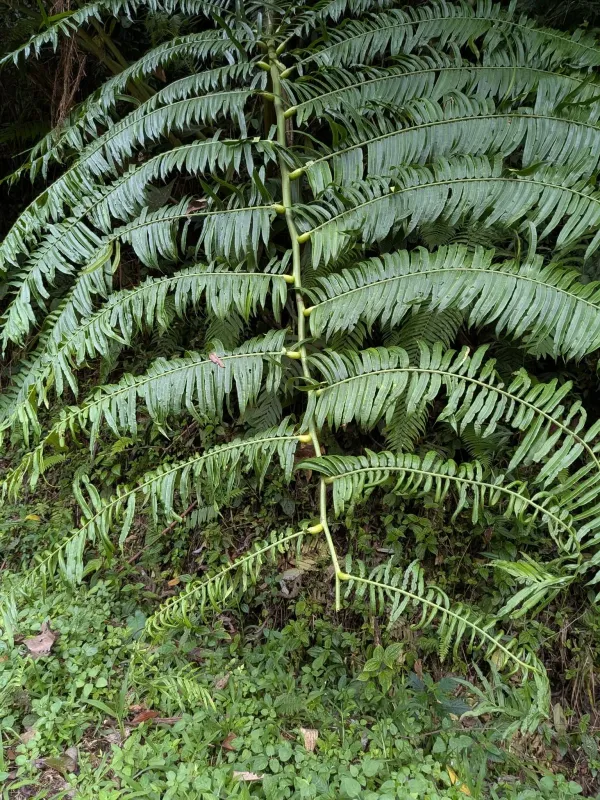
Description
Growing requirements
Angiopteris evecta, a member of the Marattiaceae family, is a massive tropical fern naturally occurring in the humid forests of Southeast Asia, the Pacific Islands, and parts of Australia.
This species requires a tropical climate with high humidity levels, ideally maintained between 70% and 90%, to sustain the growth of its exceptionally large fronds that can reach several meters in length.
Cultivation practices demand a nutrient-rich, airy, and moisture-retentive soil mixture. A composition based on forest leaf mold, peat, and organic compost ensures optimal nutrient uptake for the plant.
Temperature stability is crucial for this fern; it thrives in environments where temperatures stay between +20°C and +28°C, and exposure to cold drafts or temperatures below +15°C must be strictly avoided.
Light management involves providing bright but heavily filtered light. Direct sunlight is highly detrimental and causes tissue scorching, making the plant suitable for shade-house or greenhouse conditions.
Main diseases and pests
The most significant threat to Angiopteris evecta is root rot caused by stagnant water in the substrate. Adequate drainage is the single most important factor in the success of its agricultural management.
Scale insects and mealybugs represent the primary pest threats, as they can quickly colonize the undersides of the fronds, leading to stunted growth and secondary viral issues.
Spider mites are a persistent problem in greenhouses with low humidity. Regular misting and monitoring are required to prevent large-scale infestations that can defoliate the plant.
Fungal leaf spot diseases may appear if the air circulation is poor and humidity remains trapped on the surface of the fronds for extended periods without proper ventilation.
General stress due to improper handling, sudden environmental changes, or transplantation shock can leave the plant vulnerable to secondary infections that are difficult to treat once established.