
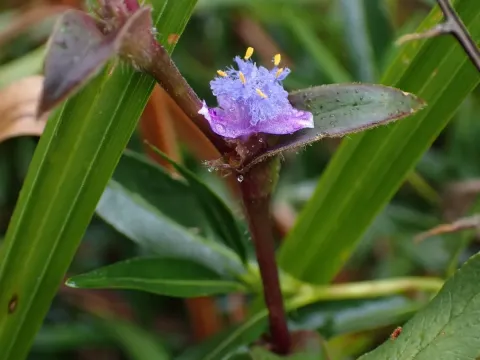
Amischophacelus
Amischophacelus
Amischophacelus belongs to the Commelinaceae family, a diverse group of plants typically found in tropical and subtropical regions. This crop requires specific conditions to ensure successful germination and early development stages.
What the section contains

Amischophacelus
Sowing should be performed in a well-draining substrate rich in organic matter. The seeds require shallow placement to facilitate optimal gas exchange, as deep sowing often results in poor emergence rates for this particular genus.
Maintaining consistent moisture levels is essential during the initial germination phase. Utilizing controlled environment agriculture, such as greenhouses, allows growers to provide the necessary stable conditions for the seeds.
The ideal timing for sowing occurs during periods of increasing light intensity. Proper daylight duration is a critical factor for the plant to establish a robust root system before entering the rapid vegetative growth phase.
Uniform emergence is usually achieved at temperatures between 22 and 25 degrees Celsius. Growers should avoid temperature fluctuations to prevent seedling stress and ensure uniform growth across the entire planting area.
This crop thrives in environments with bright, indirect light. Excessive exposure to direct sunlight can lead to leaf scorching, significantly impacting the overall vigor and aesthetic quality of the cultivated plants.
The soil requirements focus on high permeability and drainage. Amischophacelus is highly sensitive to waterlogged conditions, which can quickly lead to root rot and other physiological disorders in the plant system.
Humidity levels play a vital role in the successful development of this species. In arid climates, artificial humidification is necessary to mimic the natural environment of the plant, preventing leaf tip necrosis and general stress.
Regular fertilization with balanced nutrients is recommended during the peak growing season. However, nitrogen applications should be monitored carefully to prevent excessive vegetative growth that may hinder the plant's health.
Proper plant spacing is essential to ensure adequate airflow within the crop canopy. Good ventilation reduces the risk of pathogens and supports healthy development of all aerial parts of the Amischophacelus plant.
Fungal pathogens, particularly root rot, are the primary threat to the crop, especially in conditions of poor soil drainage. Maintaining a dry root zone between watering intervals is the most effective preventative measure.
Spider mites are common pests that thrive in low-humidity environments. Their presence can be identified by fine webbing and yellowing leaves, requiring immediate integrated pest management strategies to control infestations.
Aphids can also cause significant damage to young shoots by feeding on plant sap. Early detection is crucial, as populations can expand rapidly if left unchecked under favorable temperature conditions.
Powdery mildew represents a significant risk when air circulation is compromised or humidity levels become erratic. This pathogen can quickly spread, reducing the plant's ability to perform photosynthesis efficiently.
Standard sanitation practices, including the use of disinfected tools and high-quality propagation materials, are fundamental to managing threats. Integrated approaches combining cultural practices and biological controls remain the gold standard.