
American sycamore
Platanus occidentalis L.
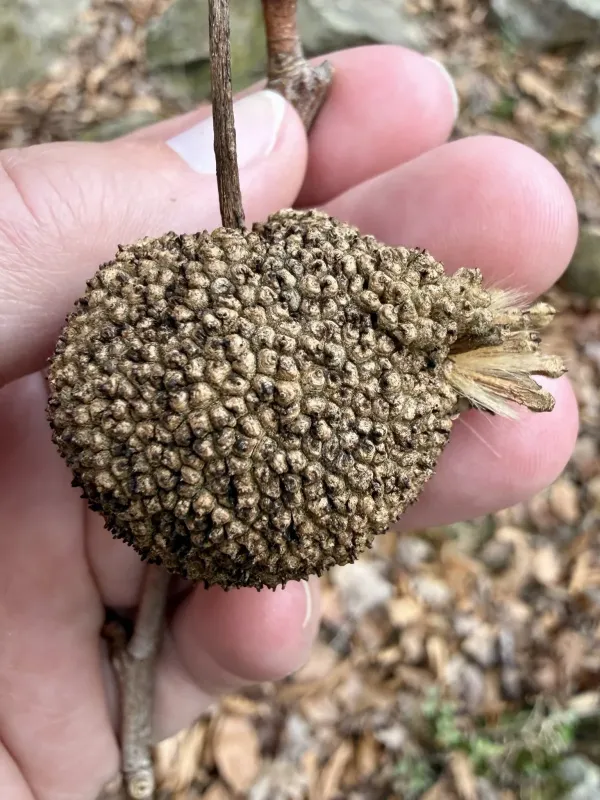
Description
Sowing dates
Propagation of Platanus occidentalis via seeds requires a period of cold stratification, typically lasting 60 to 90 days at temperatures between 1 and 5 degrees Celsius. This mimics natural winter conditions to trigger germination.
Seeds should be sown in early spring in well-drained, moist potting media. Since the seeds are small, they should be covered only lightly with soil and kept consistently moist until germination is complete.
Cuttings are a more efficient method for cloning, as they preserve the genetic characteristics of the parent tree. Hardwood cuttings are taken in late winter and rooted in a controlled environment to ensure high success rates.
Young seedlings are sensitive to transplant shock and should be handled with care. Adequate spacing between seedlings in the nursery is critical to prevent the spread of soil-borne pathogens.
Once the trees reach a height of approximately 50–70 centimeters, they are ready for planting in their permanent location, provided the root ball is well-developed.
Growing requirements
The American sycamore is a member of the Platanaceae family and is native to the riparian zones of North America. It is known for being one of the largest deciduous trees on the continent.
This species thrives in deep, fertile, and moist soils. It is particularly well-adapted to floodplains where it can access groundwater, though it requires good soil aeration to prevent root rot.
Platanus occidentalis is highly intolerant of shade. To reach its full potential, it must be planted in full sun where it has ample space to expand its crown and root system.
It is relatively adaptable to various climates but performs best in regions with high annual rainfall and a long, warm growing season. It can tolerate occasional flooding better than most other hardwood species.
Urban plantings benefit from its high tolerance to air pollution, although it should not be planted in highly compacted soils, as this restricts its rapid growth rate.
Yield
The American sycamore is a valuable timber species, widely utilized for its unique wood properties. The wood is moderately heavy, hard, and features a distinct grain pattern often used for interior woodwork.
Lumber from this tree is frequently processed into veneers, furniture parts, and high-quality plywood. It is also used in the manufacturing of butcher blocks due to its resistance to splitting.
Beyond wood production, the tree serves as an excellent windbreak and shade provider in agricultural settings, helping to modulate temperatures and protect crops in surrounding fields.
Managed plantation forestry of Platanus occidentalis can yield significant timber volumes within a relatively short period compared to other hardwood species, making it an economically viable crop.
The tree also provides substantial ecosystem services, including carbon sequestration and soil stabilization, which are increasingly relevant in modern land management practices.
Main diseases and pests
Sycamore anthracnose, caused by the fungus Apiognomonia veneta, is the most significant disease affecting the American sycamore. It typically causes leaf blight and twig dieback during cold, wet springs.
Powdery mildew can also affect young trees, particularly in late summer when humidity levels are high. It manifests as a white, dusty fungal growth on the leaves, impacting overall vigor.
The sycamore lace bug is a common pest that feeds on the underside of leaves. Severe infestations cause foliage to turn yellow and drop prematurely, which can stunt tree growth.
Management involves the removal of infected twigs during the dormant season and the strategic use of fungicides. Maintaining tree health through proper watering and fertilization helps the tree resist attacks.
- Sanitary pruning of infected limbs
- Fungicide applications in early spring
- Integrated pest management for lace bugs
- Maintenance of soil moisture levels