
Aloe Haworthia
Aloe aristata x Haworthia limifolia
Description
Growing requirements
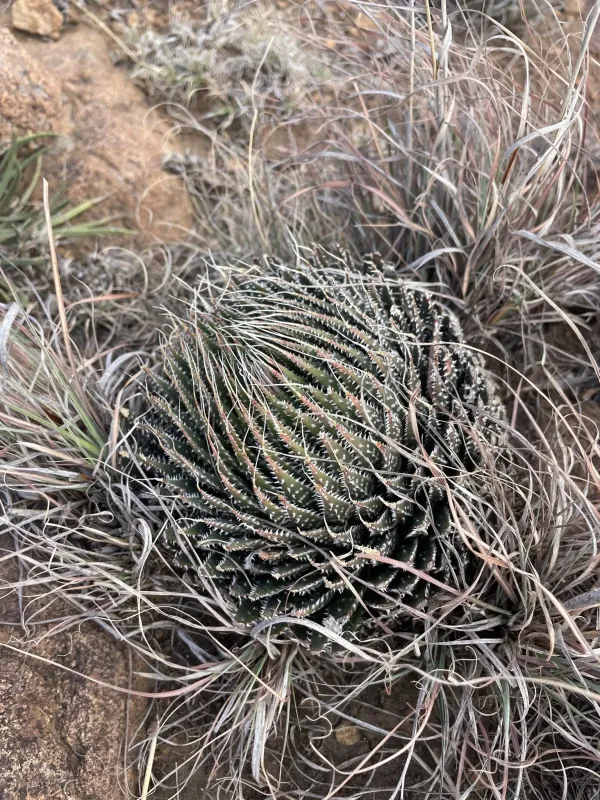
Aloe Haworthia is a distinctive intergeneric hybrid resulting from the cross-pollination of Aloe aristata and Haworthia limifolia. This plant belongs to the Asphodelaceae family and exhibits a perfect blend of the structural beauty of haworthia and the resilience of aloe.
Cultivation requires bright, indirect sunlight to maintain the compact growth habit of the rosette. While these plants appreciate strong light, harsh midday sun can lead to leaf scorching and loss of deep green coloration.
The substrate must be highly porous and inorganic-heavy to ensure excellent drainage. A specialized cactus and succulent mix amended with perlite or pumice is the industry standard for preventing moisture-related failures.
Temperature management is critical: aim for 20–25°C during the growing season. In winter, a resting period at 10–15°C is recommended to mimic natural conditions, which helps the plant prepare for the next growth cycle.
Watering should be performed using the "soak and dry" method. It is essential to ensure the soil is entirely dehydrated before the next watering session to prevent the physiological stresses associated with root saturation.
Main diseases and pests
Root rot is the most prevalent threat to Aloe Haworthia, usually stemming from overwatering or inadequate soil aeration. Once root rot sets in, the plant's structural integrity rapidly declines, necessitating immediate rescue and repotting.
Mealybugs are common pests that tend to hide within the tight crevices of the rosette leaves. Regular monitoring of the leaf bases and the use of insecticidal soaps can manage these infestations effectively.
Spider mites may occasionally occur, especially in environments with low humidity. Maintaining adequate air circulation and moderate humidity levels acts as a natural deterrent against these pests.
Fungal infections can appear as dark spots on the leaves if moisture remains trapped in the center of the rosette. Proper placement ensures that water evaporates quickly after irrigation.
Strict adherence to light requirements is the best strategy for maintaining robust plant health. A strong plant is naturally more resistant to the pathogens commonly encountered in indoor cultivation.