
Aloe aristata Haworthia margaritifera
Aloe aristata Haw. x Haworthia margaritifera (L.) Haw.
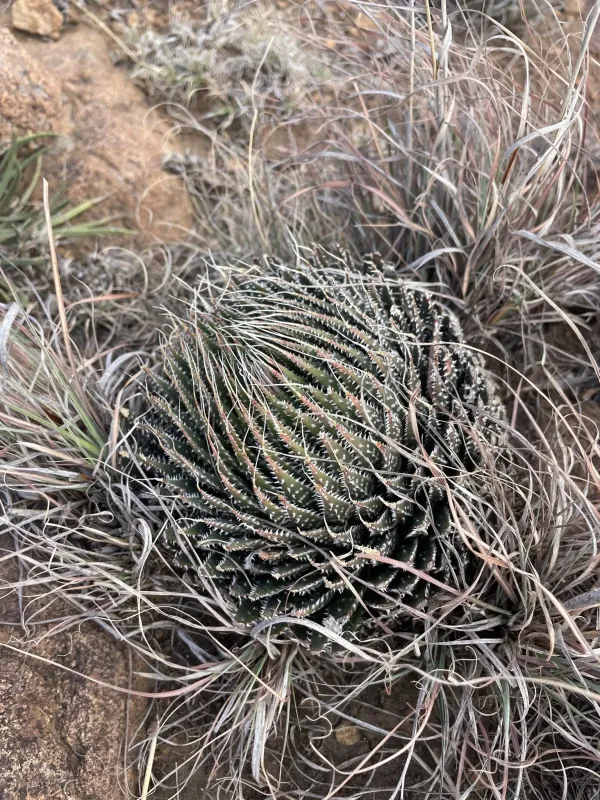
Description
Growing requirements
Aloe aristata x Haworthia margaritifera is an intergeneric hybrid within the Asphodelaceae family. This ornamental succulent displays a compact rosette form, combining the structural resilience of Aloe with the distinctively textured, pearled foliage of Haworthia species.
Successful cultivation requires bright, filtered light. While the plant is adaptive, excessive direct sunlight often causes the leaves to bleach or develop necrotic spots, whereas insufficient light results in etiolation and loss of the characteristic compact growth habit.
The substrate must be highly porous and fast-draining to prevent root asphyxiation. A professional-grade succulent mix amended with coarse inorganic materials such as pumice or volcanic grit is essential for maintaining a healthy rhizosphere.
Temperature management is critical for the plant's seasonal cycle. It thrives in ambient temperatures ranging from 20°C to 25°C during the active growing season, but requires a cooler environment of 10°C to 15°C during winter dormancy.
Watering practices should follow the dry-out cycle, where the substrate is allowed to dry out completely between sessions. During the winter, irrigation must be severely restricted to avoid physiological stress and potential rot.
Main diseases and pests
Root rot, primarily caused by waterlogged soil, is the most common physiological disorder. It manifests as a systemic softening of the leaf tissues and a loss of attachment to the root base, requiring immediate repotting.
Pest pressure is frequently caused by mealybugs, which conceal themselves in the tight junctions of the rosette leaves. These pests cause chlorosis and stunted development by feeding on the plant's vascular system.
Chemical control involves the use of systemic insecticides specifically labeled for succulent use. Applications should be performed in well-ventilated areas, ensuring thorough coverage of the leaf axils where insects prefer to aggregate.
Cultural prevention includes maintaining adequate air circulation and avoiding overhead watering. Keeping the plant free from debris and ensuring the crown stays dry are standard protocols for preventing fungal infections.
Balanced liquid fertilizers designed for cacti should be applied at half-strength during the growing season. Over-fertilization induces rapid, weak growth that makes the plant more susceptible to both environmental stresses and insect infestations.