
Allagoptera campestris
Allagoptera campestris
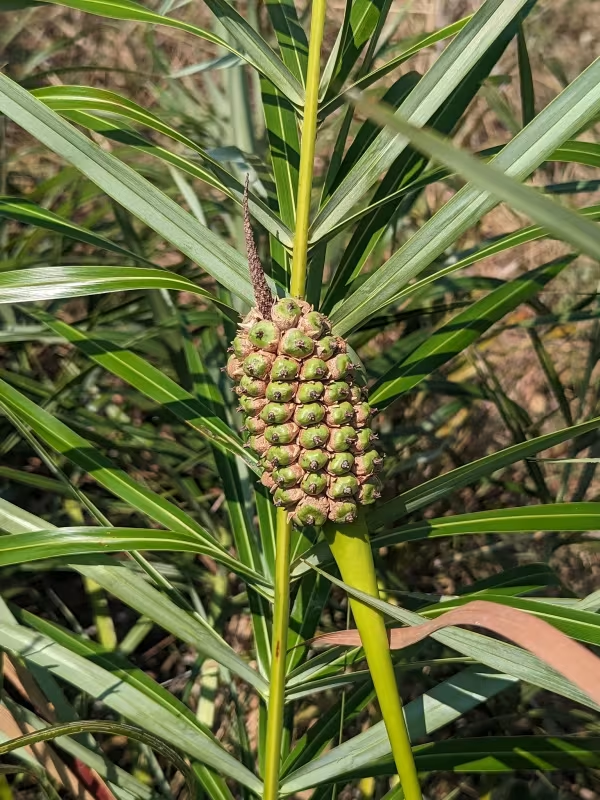
Description
Sowing dates
Propagation of Allagoptera campestris is primarily achieved through seeds. As a member of the Arecaceae family, the plant exhibits a slow germination process that demands specific temperature management.
Seeds should be sown into well-drained substrate immediately after harvesting, as fresh seeds possess higher viability. Greenhouse conditions with a controlled environment are highly recommended for successful propagation.
Planting depth should be approximately 2-3 centimeters to ensure proper establishment of the primary root. The optimal temperature for seed germination ranges between 25-28 degrees Celsius.
The time required for emergence varies from a few weeks to several months, depending on seed maturity. It is essential to avoid over-saturation of the substrate to prevent the embryo from rotting in the soil.
Seedlings should be transplanted after the development of two or three true leaves, utilizing containers with excellent drainage properties to facilitate root aeration and prevent water stagnation.
Growing requirements
Allagoptera campestris is native to the Brazilian cerrado, meaning it is highly demanding regarding light exposure. The plant requires open, sunny locations with direct sunlight to perform efficient photosynthesis.
The preferred soil type is sandy and well-drained, with low organic matter content. While adapted to nutrient-poor soils, the plant responds positively to moderate applications of phosphorus and potassium fertilizers.
The climate in its native range is characterized by alternating wet and dry seasons. The species features a robust root system, allowing it to withstand brief periods of drought, which is a key survival mechanism.
In temperate climates, the plant can only be cultivated in protected environments such as greenhouses or conservatories, as it cannot survive freezing temperatures or prolonged cold exposure.
Soil aeration is a critical component of its cultivation. Dense, clay-rich soils are highly unsuitable as they prevent adequate oxygenation of the roots and lead to inevitable root rot.
Yield
The agricultural use of Allagoptera campestris is niche, primarily focused on local consumption rather than large-scale industrial farming. Yield levels remain modest and highly dependent on environmental factors.
The fruits of this palm are edible and contain significant amounts of carbohydrates and oils. They represent a potential food resource for local communities and have historical importance in regional foraging.
Biological productivity is directly linked to light intensity and consistent rainfall during the growing season. In its natural habitat, the plant contributes to ecosystem services and biodiversity maintenance.
Harvesting is performed manually upon the full ripening of the fruit. Due to the lack of large-scale plantations, standardized mechanical harvesting methods are currently unavailable for this species.
Beyond fruits, the leaves may offer secondary economic value through craft production or decorative use, which enhances the plant's overall utility within small-scale horticultural systems.
Main diseases and pests
Primary threats to Allagoptera campestris include fungal infections resulting from poor drainage and high humidity. Root rot caused by various soil-borne pathogens is particularly detrimental to young plants.
Pests, such as spider mites and scale insects, frequently infest the foliage in enclosed environments. These pests sap the plant's vitality, leading to chlorosis, stunted growth, and potential leaf dieback.
Routine monitoring is essential to catch early infestations. The use of biological controls is encouraged to maintain plant health while avoiding the harsh chemical treatments that can damage sensitive palm tissue.
Development of pathogens like Pythium is often triggered by over-watering. Maintaining an appropriate moisture balance that allows the root system to breathe is the most effective preventative measure against these threats.
Invasive weeds pose a significant challenge to young seedlings, as they compete for light, water, and nutrients. Maintaining a clean cultivation area is vital during the early stages of plant development.
Harvesting
Harvesting the fruits of Allagoptera campestris requires selective picking due to uneven maturation rates. It is crucial to harvest fruits as they reach physiological maturity to maximize their quality.
The ideal time for harvesting is during the early morning hours, as this minimizes moisture content on the fruit surface and reduces the risk of mold growth during subsequent storage.
After collection, the fruits should be cleaned and placed in well-ventilated areas to dry. Proper post-harvest handling is essential to ensure shelf-life and maintain the nutritional integrity of the produce.
Using ventilated containers for transport and storage is critical to avoid fruit bruising and spoilage. The delicate structure of the fruit requires gentle handling to prevent damage under its own weight.
For longer-term availability, the fruits can be frozen or dried, which allows for their utilization in culinary applications well beyond the immediate harvest season.