
Allagoptera arenaria
Allagoptera arenaria
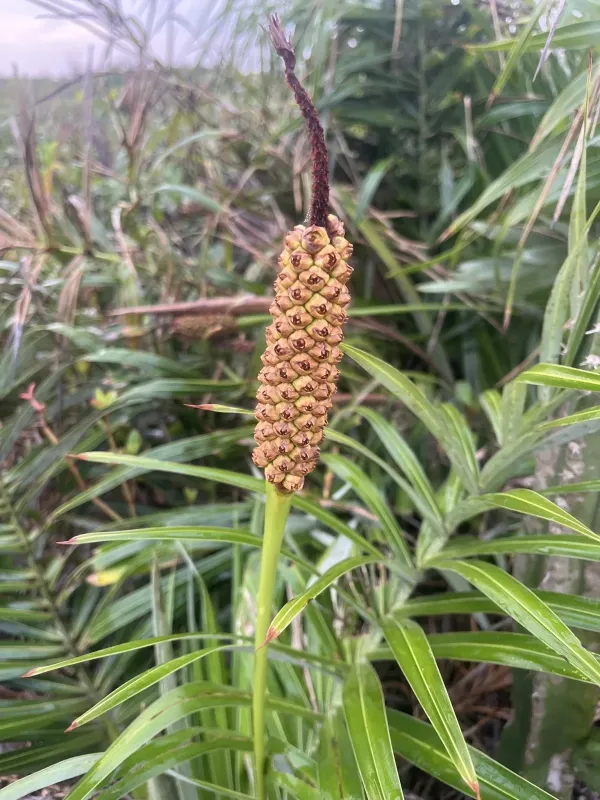
Description
Growing requirements
Allagoptera arenaria is a distinctive species of palm belonging to the Arecaceae family. Native to the coastal regions of Brazil, it is uniquely adapted to thrive in sandy soils and harsh shoreline environments.
The plant requires full sun exposure to maintain its compact growth habit and overall health. It is highly tolerant of saline conditions, making it an excellent candidate for maritime landscape restoration and soil stabilization.
Climatic requirements are strictly tropical or subtropical, as the species does not possess frost tolerance. Consistent warmth throughout the year is essential for the vegetative cycle of the palm.
Regarding soil, it prefers well-draining, sandy substrates. While it can survive in nutrient-poor soils, organic amendments applied periodically can enhance the growth rate and structural integrity of the leaves.
Its primary economic use includes ornamental landscaping and the consumption of its edible fruits by local communities. It is also valued for its role in preventing dune erosion in its natural habitat.
Main diseases and pests
Root rot remains the most significant threat to Allagoptera arenaria, primarily caused by waterlogged soil conditions. Ensuring proper aeration and drainage is vital for long-term survival.
Common pests such as spider mites and scale insects can infest the foliage, particularly in low-humidity environments. Regular inspection and targeted insecticide treatments are recommended for management.
Palm weevils pose a severe threat, as they can bore into the main stem and destroy the apical meristem. Early detection and chemical control are necessary to prevent severe losses in plantings.
Nutrient deficiencies, specifically magnesium and potassium, often manifest as yellowing of the leaf tips. Adjusting the fertilization program according to leaf analysis is a critical agricultural practice.
Fungal infections, such as leaf spot, may occur in damp, poorly ventilated conditions. Promoting airflow around the plants helps to mitigate the spread of these pathogens effectively.