
Adenostyles australis
Adenostyles australis
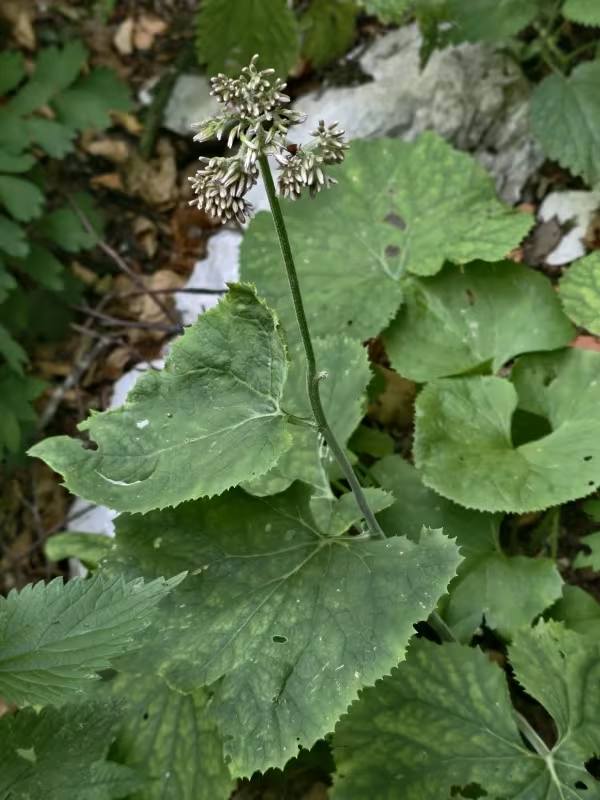
Description
Growing requirements
Adenostyles australis is a perennial herbaceous plant belonging to the Asteraceae family. Originating from mountainous regions in Southern Europe, it is well-adapted to the cool and humid conditions of alpine and subalpine meadows.
The plant thrives in environments that mimic its natural habitat, requiring high air humidity and moderate temperatures. It is not suited for hot, arid climates and requires careful placement in partially shaded garden spots.
Soil requirements focus on high organic matter content, nutrient richness, and excellent moisture retention. It performs best in loamy soils with a neutral or slightly acidic pH level.
Cultivation practices involve regular irrigation to prevent the soil from drying out, which is the most common cause of plant decline in non-native environments. Mulching is recommended to maintain stable root temperature.
In terms of agricultural use, this species is primarily cultivated for ornamental purposes in rock gardens or specialized collections, given its unique foliage and distinct botanical profile.
Main diseases and pests
Root rot represents the most significant threat to the health of the plant, often resulting from improper drainage or excessive water accumulation around the crown of the root system.
Foliage-feeding pests such as slugs and snails pose a constant risk, particularly in damp and shaded conditions where these mollusks thrive and congregate.
Spider mites are a concern in periods of low humidity, as they can rapidly dehydrate the plant's leaves and lead to a significant loss of photosynthetic activity.
Fungal diseases like powdery mildew may develop if the air circulation around the plant is restricted, necessitating regular monitoring and proper spacing during planting.
Effective management requires a combination of preventative measures, including maintaining soil health and providing adequate air circulation to prevent the onset of these common biotic stresses.