
Adenostoma
Adenostoma
Adenostoma is a genus of evergreen shrubs in the Rosaceae family, native to the western regions of North America. These plants are synonymous with the chaparral biome, where they play a fundamental role in landscape stability.
What the section contains


Adenostoma
The climate requirements for Adenostoma are centered around a Mediterranean-type environment. It thrives in areas with mild, wet winters and hot, dry summers, showing exceptional resilience to high thermal indices.
Soil conditions must be well-drained and aerated to prevent root rot. The plant is highly adapted to nutrient-poor soils, including those of volcanic or sedimentary origin, often found on steep slopes where other vegetation struggles.
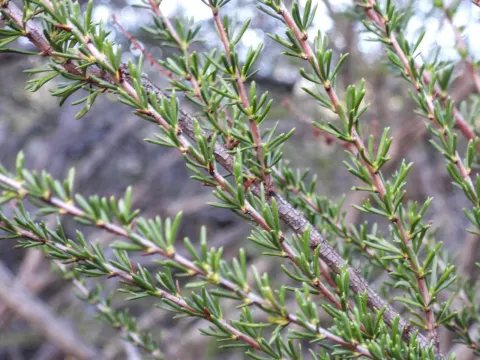
Botanically, Adenostoma is characterized by needle-like or small, tough leaves designed for transpiration control. This specialized anatomy allows the plant to maintain its physiological functions during severe droughts.
Regarding its utility, Adenostoma is highly valued for soil erosion control and slope stabilization. It is also an essential component of native plant communities, providing habitat and resources for local biodiversity.
The primary threat to the stability of Adenostoma populations is the frequency of wildfires. While the plant has evolved to regenerate post-fire, excessive frequency can deplete soil seed banks.
Pathogenic threats include various root-rot fungi, typically triggered by improper drainage or excessive water accumulation around the crown. These infections can be lethal if soil conditions remain consistently wet.
Pests are generally not a significant issue for healthy plants. However, in stressed environments, scale insects and aphids may occasionally feed on young, succulent shoots, causing minor localized damage.
Habitat fragmentation remains a critical concern for this species. Urban development and land clearing often disrupt the natural regeneration processes that are essential for long-term survival.
Conservation strategies focus on managing fire regimes and protecting the integrity of the soil crust, which is necessary for the successful establishment of new seedlings in the wild.