
Redshank
Adenostoma sparsifolium
Description
Growing requirements
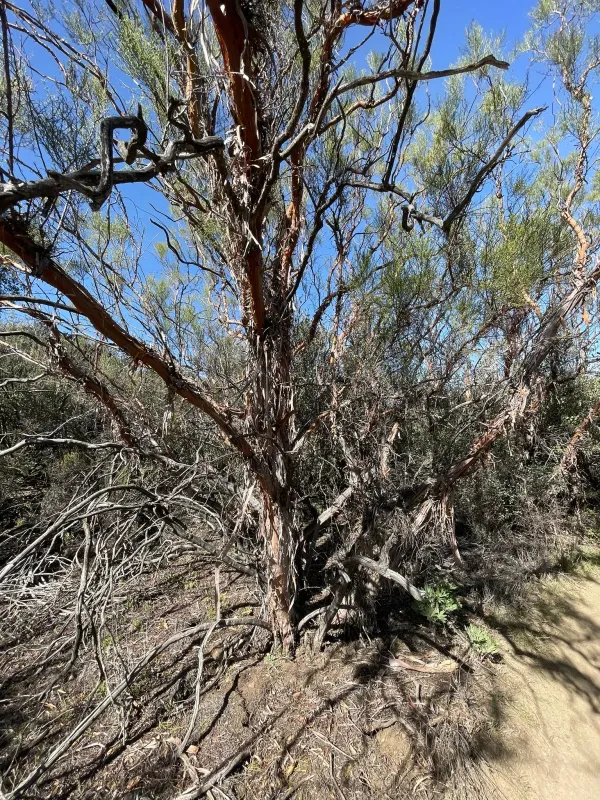
Redshank (Adenostoma sparsifolium) is an evergreen shrub belonging to the Rosaceae family, known for its distinct reddish, shredding bark and thin, needle-like leaves.
It is native to the chaparral ecosystems of California and Baja California, where it is often referred to as ribbonwood due to its unique bark texture.
The plant thrives in Mediterranean-type climates, requiring full sun and exceptionally well-draining, rocky, or sandy soils to prevent root rot.
It is highly drought-tolerant and requires virtually no irrigation once established, making it an excellent candidate for xeriscaping and sustainable land restoration.
The plant is adapted to periodic wildfires, and its root crown allows for rapid regeneration from dormant buds even after the aerial parts are scorched.
Main diseases and pests
The primary threat to the health of Adenostoma sparsifolium is fungal root decay, which is triggered by excessive soil moisture and poor drainage in heavy clay soils.
Pests are generally minimal for mature plants in their natural range, but young growth may be susceptible to aphids or spider mites under greenhouse conditions.
Leaf spot diseases can occur during prolonged periods of high humidity, particularly if the plant is grown in areas with insufficient air circulation.
Successful cultivation requires keeping the base of the plant free of mulch and debris to promote evaporation and prevent pathogens from attacking the root crown.
To ensure plant vigor, practitioners should avoid over-fertilization, as the species is adapted to nutrient-poor soils and may become weak if overstimulated by nitrogen.