
Acicarpha tribuloides
Acicarpha tribuloides
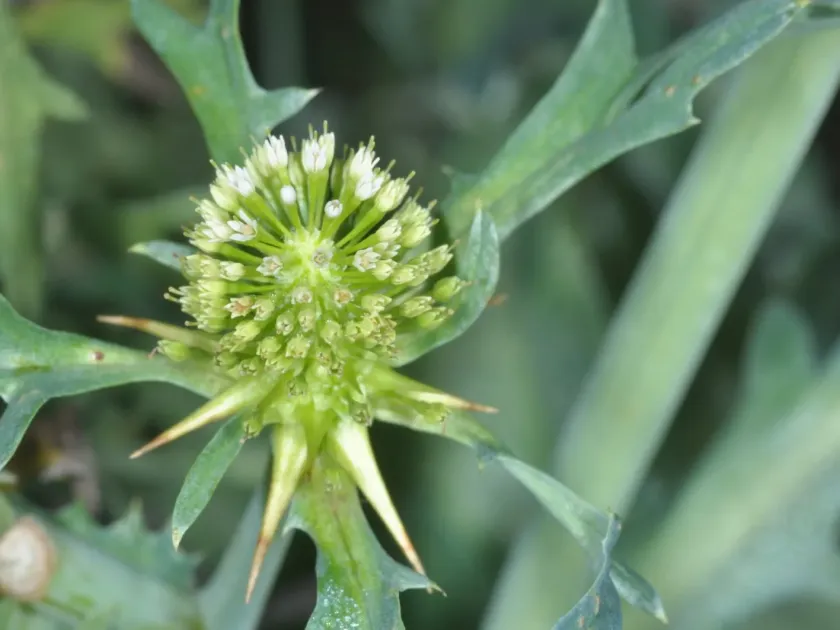
Description
Growing requirements
Acicarpha tribuloides is a plant species belonging to the Calyceraceae family. Native to South America, it is a resilient herbaceous annual that occupies specific ecological niches, often thriving in disturbed soils and open habitats.
Botanically, the plant features a distinct basal rosette of leaves and prostrate stems. It has evolved to survive in environments where water availability fluctuates, showcasing a high efficiency in resource utilization during its growth cycle.
Climatic requirements are focused on high light intensity and moderate to warm temperatures. The plant requires full sun to reach its full productive potential, making it unsuitable for shaded or highly temperate, cold-climate regions without specific protective measures.
Soil requirements are relatively specific: the species prefers well-draining, sandy, or coarse-textured soils. Avoidance of soil compaction is essential, as the root system of Acicarpha tribuloides is sensitive to hypoxia and waterlogging.
Agronomic management involves preparing the seedbed to be fine and free of major competing weeds. Given the plant's growth habit, maintaining proper row spacing is crucial to allow for adequate ventilation and to prevent the development of opportunistic fungal pathogens.
Main diseases and pests
Key threats include root rots caused by soil-borne pathogens like Pythium or Rhizoctonia species, which are particularly prevalent in soils with poor drainage structures.
Insects that target the foliage, such as beetle larvae and certain mites, pose the primary threat to the vegetative development, especially during the early growth stages before the canopy closes.
Maintaining balanced nutrient levels, especially regarding nitrogen, is vital, as excessive application can result in succulent growth that attracts increased pest pressure and reduces the plant's natural resistance.
Weed management is a significant challenge during the first weeks of growth; early mechanical cultivation or inter-row hoeing is recommended to ensure the crop establishes dominance over the site.
A rigorous monitoring program must be established during the peak of the growing season to detect early signs of infestation and to apply targeted control measures, prioritizing biological control agents where possible.