
Acicarpha bonariensis
Acicarpha bonariensis
Description
Growing requirements
Acicarpha bonariensis is a herbaceous perennial plant belonging to the Campanulaceae family, although in previous botanical classifications it was assigned to the distinct Calyceraceae family. The plant originates from the temperate regions of South America, including parts of Argentina, Uruguay, and Southern Brazil.
In its natural habitat, this plant thrives in humid meadows, wetlands, and open sunny areas with well-drained soil structures. It is adapted to moderate climatic conditions, although it requires protection from severe frost and prolonged drought periods when grown in non-native environments.
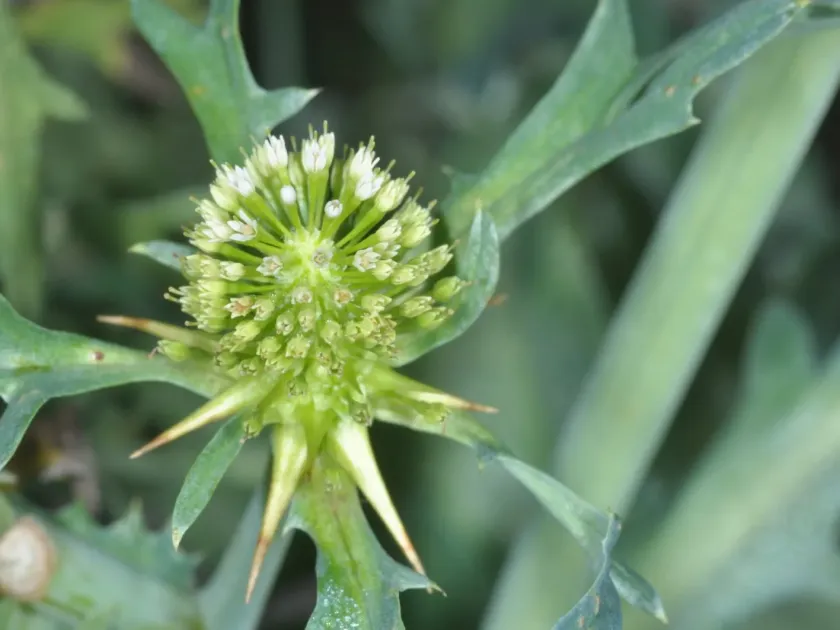
The botanical structure of the plant features sessile, serrated leaves and characteristic capitate inflorescences, which consist of small tubular flowers. Its root system is robust and well-developed, allowing the plant to effectively stabilize soil and access moisture from deeper soil layers.
Optimal soil conditions for cultivation include a neutral to slightly acidic pH range. Ensuring proper soil aeration and drainage is crucial, as the crown of the plant is highly susceptible to fungal rot if exposed to waterlogged conditions or poor air circulation.
The primary horticultural use of Acicarpha bonariensis is in ornamental gardening and botanical research. Its unique, globose flower heads make it an interesting candidate for specialized garden displays, particularly in landscapes that mimic its native moist, meadow-like conditions.