
Acicarpha spathulata
Acicarpha spathulata
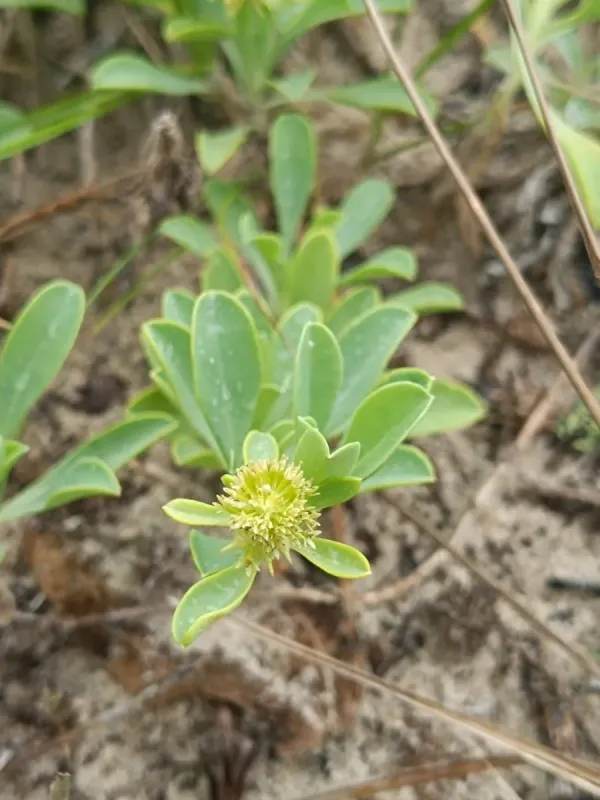
Description
Growing requirements
Acicarpha spathulata is an herbaceous plant belonging to the Campanulaceae family. It is distinct due to its spatula-shaped leaves and dense, head-like inflorescences, which distinguish it from other members of the Campanulales order within its native environment.
The native habitat of this plant includes the temperate and subtropical regions of South America, specifically in Argentina and Uruguay. It thrives in open, sunny environments where it can compete for light and space with other herbaceous perennials.
For successful growth, the plant requires well-drained soils, preferably with a sandy or loamy texture. It does not tolerate waterlogged conditions, which can lead to root decay, and thus requires a site with good natural drainage or careful irrigation management.
While Acicarpha spathulata is not a major commercial agricultural crop, it is of interest in botanical research and ecological restoration. Its presence in the local ecosystem contributes to the diversity of the Campanulaceae family and provides valuable data on plant adaptation.
The morphology of the plant is adapted to local climate fluctuations. The specific shape of the leaves helps in minimizing water loss, and the reproductive strategy involving clustered flowers ensures efficient seed production during the favorable growing seasons.