
Automotive Chemistry and Technical Fluids for Machinery: Rules and Common Mistakes
Technical fluids and automotive chemicals on farms are often considered minor details that can be replaced with anything. In reality, improperly diluted antifreeze, AdBlue from a dirty canister, or the wrong type of sealant can damage components whose repair costs…

Technical fluids and automotive chemicals on farms are often considered minor details that can be replaced with anything. In reality, improperly diluted antifreeze, AdBlue from a dirty canister, or the wrong type of sealant can damage components whose repair costs incomparably more. Below are the main groups of compositions, the standards by which they are selected, and typical mistakes made in workshops.
What Automotive Chemistry for Machinery Includes
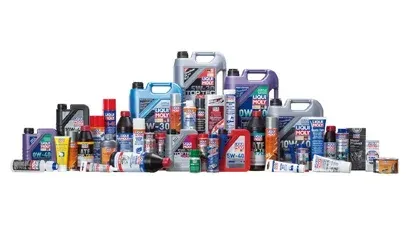
This term combines various products. What falls into the category of automotive chemicals for agricultural machinery and special equipment is divided into several groups:
operational fluids: coolants, AdBlue, brake fluid, electrolyte, distilled water, washer fluids;
service compounds: penetrating lubricants, cleaners, degreasers, anti-silicone agents;
sealants and thread lockers;
fuel additives, primarily anti-gels;
products for preserving equipment during storage.
Oils and greases belong to a separate topic and are not covered here.
Coolants
Antifreeze is a mixture of glycol (ethylene glycol or propylene glycol) with water and a package of corrosion inhibitors. The type of fluid is determined precisely by the inhibitors:
traditional and hybrid (tosol, G11) — inorganic inhibitors, including silicates; they deplete faster and require more frequent replacement;
carboxylate (G12, G12+) — organic acid-based inhibitors with a longer service life;
lobrid (G12++, G13) — organic base with a small proportion of mineral inhibitors.
Basic rules:
Do not mix fluids of different types: incompatible inhibitors can precipitate and clog the radiator.
Dilute concentrate only with distilled water. Hard water salts form scale in the engine block jacket.
Check the freezing point with a hydrometer or refractometer before winter, not by color.
Focus on the engine manufacturer's tolerances and ASTM D3306 or ASTM D6210 standards (for heavy-duty diesels) if they are specified.
AdBlue for SCR Systems
Modern tractor, combine, and truck engines with a selective catalytic reduction system use AdBlue — a 32.5% aqueous urea solution. Requirements for it are set by ISO 22241.
The solution freezes at approximately −11 °C; after thawing, its properties are restored.
It must not be diluted with water: the quality sensor will detect the deviation, and the system will limit power.
AdBlue can be stored and poured only in clean plastic containers or stainless steel vessels. Copper, brass, zinc, aluminum, and ordinary steel react with the solution.
When heated, the solution decomposes faster, so canisters should not be kept in the sun or near heating sources.
Getting AdBlue into the fuel tank is a serious mistake requiring flushing the fuel system before starting the engine.
Brake Fluid and Electrolyte
Brake Fluid
DOT 3, DOT 4, and DOT 5.1 fluids are glycol-based and mix with each other, although the mixture acquires the properties of the worst of the fluids. DOT 5 is silicone-based and must not be mixed with them. Glycol fluids are hygroscopic: by absorbing moisture, they lose their boiling point, which is why they are changed according to the manufacturer's schedule rather than "by condition." Note: in many tractors, brakes are wet and operate on transmission-hydraulic oil. DOT must not be poured into them, just as oil must not be poured into a hydraulic actuator designed for brake fluid — the seals will swell.
Electrolyte and Distilled Water
In serviceable lead-acid batteries, when the level drops, distilled water is added rather than electrolyte: water evaporates while the acid remains. Electrolyte is added only if it has been spilled. The density of a charged battery in a moderate climate is usually 1.27–1.28 g/cm³; the exact value is indicated by the manufacturer.
Anti-gels and Winter Diesel Fuel
A pour point depressant does not dissolve paraffin crystals that have already precipitated. It only prevents them from sticking together, so it is added to warm fuel before frost sets in, strictly in the proportion indicated on the container. If the engine no longer starts due to thickened fuel, the anti-gel will not help: the fuel system and filter will have to be thawed. Exceeding the dosage does not improve the result and can impair the performance of fine fuel filters.
Service Compounds and Sealants
Penetrating Lubricants
Compounds like WD-40 are designed for loosening rusted fasteners, displacing moisture, and providing short-term protection. This is not a replacement for bearing or joint grease: the solvent evaporates, and after a short time, the unit runs dry again. Correct procedure: clean the thread with a brush, apply the compound, wait 10–15 minutes, repeat if necessary.
Degreasers
Anti-silicone and similar cleaners are used before painting, gluing, and applying sealant. Without degreasing, even a high-quality sealant will not hold to the surface.
Sealants and Thread Lockers
Anaerobic thread lockers polymerize without access to air in the thread gap. Medium strength allows disassembly with ordinary tools, while high strength often requires heating.
Silicone gasket sealants are used where the factory provides a liquid gasket. Oil-resistant compounds are required for oil cavities.
Sealant is applied in a thin, even bead: excess is squeezed into the crankcase and can block the oil pickup screen.
Preservation and Common Mistakes
Before long-term storage of machinery, unpainted surfaces, hydraulic cylinder rods, and chains are coated with preservation compounds. General requirements for storing agricultural machines are described in GOST 7751-2009.
Compound | Selection Guide | Common Mistake |
|---|---|---|
Antifreeze | Inhibitor type, engine tolerance | Mixing different types, diluting with tap water |
AdBlue | ISO 22241 | Metal container, dilution |
Brake fluid | DOT class | Mixing with DOT 5, pouring into an oil-based system |
Electrolyte | Density per battery manufacturer requirements | Adding electrolyte instead of water |
Anti-gel | Dosage relative to fuel volume | Adding to already thickened fuel |
Sealant | Cavity type and temperature | Thick layer and lack of degreasing |
When purchasing chemicals for the season, check the characteristics of the compositions against the required standards, for example in the vintehpostach.com catalog. The composition should be chosen according to the equipment manufacturer's requirements, not by price or label color.
Editorial team agronom.info
Materials are prepared by the portal's agronomists and editors. We use only trusted sources: Ukrainian agricultural universities, variety registries, open scientific publications.
Related articles
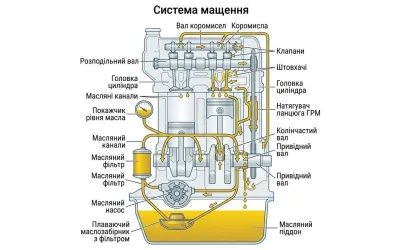
KM385BT mini tractor engine maintenance and spare parts selection
Timing and Torque Sequence for YAMZ-238 Cylinder Head: Step-by-Step Repair Guide
What to check in agricultural machinery before the season: a practical checklist to reduce downtime
Not yet comments. Be the first!
Comments