Generative Formations
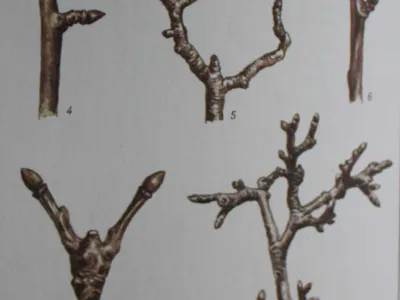
Generative formations include branches most adapted and most prone to forming generative buds. Certain categories of branches are considered generative, even if they may not have flower buds.
Practical materials for farmers: growing technologies, crop protection, crop nutrition, seeds and farm economics. 50 articles in 35 sections.
Generative formations include branches most adapted and most prone to forming generative buds. Certain categories of branches are considered generative, even if they may not have flower buds.
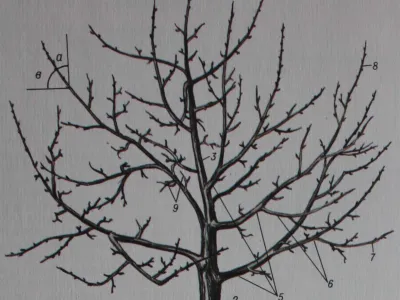
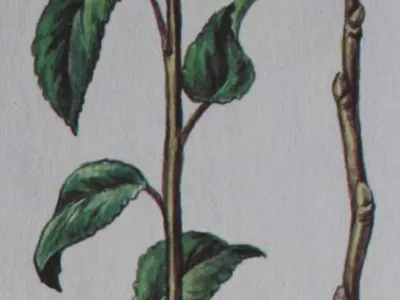
Vegetative formations of fruit trees are represented by various types of shoots and branches, whose main purpose is to increase the size (volume) of the crown and replenish…
A bud is a vegetative shoot. Until conditions promoting growth are created, it remains in a state of relative dormancy.
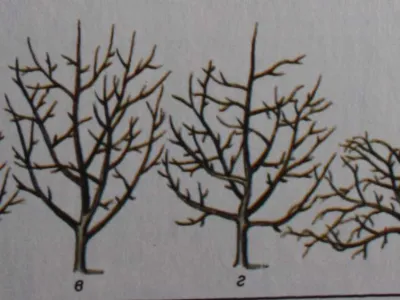
Depending on the variety, rootstock, age of the tree, and growing conditions, the crown of naturally growing trees may be broom-like, pyramidal (conical), inverted-conical, spherical, or spreading to…
It was applied long before people learned to fertilize plants with mineral nutrients and protect them from pests and diseases. The earliest references to pruning date back to…