
Tall ironweed
Vernonia altissima
Description
How to tell it apart
Tall ironweed (Vernonia altissima) belongs to the Asteraceae family. It is a robust perennial herb known for its height, which can exceed two meters in favorable conditions.
The stems are erect, stiff, and often possess fine hairs. Leaves are alternate, lanceolate in shape, and typically feature finely serrated margins along their edges.
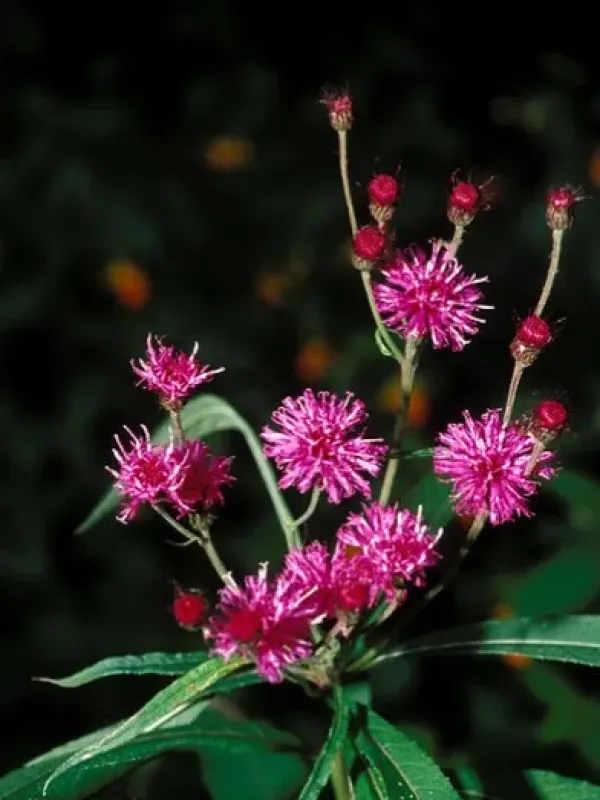
The plant produces distinct, vibrant purple flower heads clustered in terminal, flat-topped inflorescences that bloom in late summer and early autumn.
Below ground, it develops a strong, fibrous root system that allows the plant to persist through winter and regenerate rapidly in the following growing season.
Seeds are equipped with a pappus, a tuft of bristles that enables efficient dispersal over long distances via wind currents.
Where it grows
This species thrives in moist, fertile soils, frequently inhabiting floodplains, wet meadows, forest margins, and areas adjacent to streams or ditches.
In agricultural settings, it commonly invades pastures, non-cultivated field margins, and low-lying arable lands where soil moisture levels are consistently high.
Harm it causes
Tall ironweed acts as a highly competitive weed, rapidly utilizing sunlight, water, and nutrients that are vital for the growth of primary crops.
Due to its significant height and dense foliage, it creates substantial shade, which significantly reduces the photosynthetic efficiency of nearby crop plants.
The plant's deep and extensive root system depletes soil moisture reserves, putting significant water stress on crops, especially during drier spells in the growing season.
Its presence in fields hampers mechanical harvest operations, leading to decreased speed, increased machine wear, and significant contamination of harvested grain.
Furthermore, it can act as a reservoir for various pests and diseases that pose a secondary threat to the overall health and yield of agricultural commodities.
How to control
Agricultural control measures include intensive tillage or deep plowing, which helps to disrupt and exhaust the energy reserves stored in the extensive root network.
Frequent mowing is a recommended cultural practice to prevent the plant from reaching the seed-set stage, thereby reducing the bank of seeds in the soil.
Chemical control involving systemic herbicides is highly effective when applied to actively growing foliage during the pre-flowering stages of the weed.
The application of translocated herbicides ensures the chemical reaches the root system, providing a more permanent solution compared to surface-level treatments.
Integrated weed management, combining rotation cycles and targeted chemical applications, remains the most sustainable way to suppress infestations in field crops.
Taxonomy
- Latin name
- Vernonia altissima
- Family
- Прочие
- EPPO code
- VENAL