
Sisyrinchium iridifolium
Sisyrinchium iridifolium
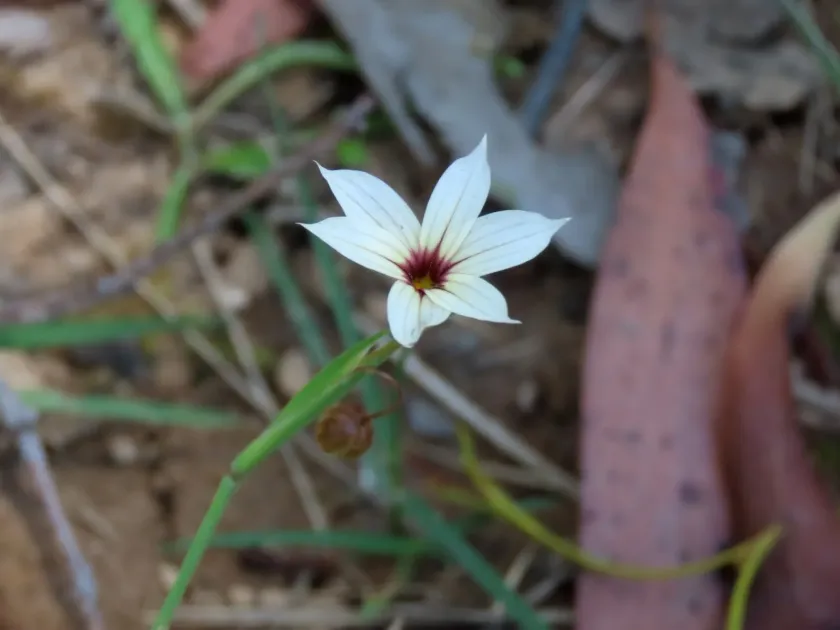
Description
How to tell it apart
Sisyrinchium iridifolium is a perennial herbaceous plant belonging to the Iridaceae family. The plant is characterized by narrow, flattened leaves that resemble those of an iris, which is the origin of its specific epithet.
The stems of the plant are distinctly winged, and mature specimens typically reach a height of 20 to 50 centimeters. The plant forms compact tufts, making it difficult to distinguish from cereal crops during the early stages of development.
Its flowers are relatively small, appearing in shades of white, pale yellow, or bluish. They are clustered in umbel-like inflorescences located at the tips of the stalks, protected by membranous bracts.
The root system consists of numerous short rhizomes and fibrous roots, which allow the plant to anchor itself firmly in the soil. The seeds are small, brown, and highly capable of spreading via wind and water runoff.
In the field, it is often confused with young grass seedlings until the plant produces its specific flower stalks, which serve as the primary diagnostic feature for identification.
Where it grows
This species is an invasive plant, most prevalent in regions with temperate and subtropical climates. Originally from South America, it has successfully naturalized in many countries around the world.
Sisyrinchium prefers moist habitats, commonly appearing in irrigated lands, rice paddies, low-lying areas, and along drainage canals. Its aggressiveness increases significantly in areas with high soil moisture levels.
The weed actively colonizes pastures, meadows, and abandoned agricultural lands, rapidly displacing native plant species. It adapts well to various soil types, including loamy and slightly acidic substrates.
In commercial fields, it is most frequently found in close-grown crops. It poses a particular threat to agricultural plots in regions with well-developed irrigation and drainage networks.
Seed dispersal occurs both naturally and through agricultural machinery. Contaminated seed stock remains a primary factor in the introduction of this weed to new, previously uninfested fields.
Harm it causes
The primary harm caused by Sisyrinchium iridifolium lies in its high competitive capacity for environmental resources. It actively absorbs moisture and nutrients, suppressing crop plants from the early stages of growth.
Due to its compact growth habit and ability to spread quickly, the weed forms dense communities that physically shade crop seedlings, leading to reduced photosynthetic activity and thinning of crop stands.
The presence of this weed in fields significantly complicates mechanized field operations. During harvesting, the vegetative mass can contaminate the grain load, increasing humidity and complicating post-harvest grain cleaning.
Sisyrinchium can act as an alternate host for several crop pathogens and pests. The accumulation of inoculum in the vicinity of crops contributes to disease outbreaks that reduce both the quality and quantity of the harvest.
Long-term infestation leads to soil depletion. Controlling the weed requires significant investment in herbicides and additional manual or mechanical labor to mitigate the economic losses caused by its presence.
How to control
Mechanical control includes regular deep plowing, which helps suppress the development of the rhizome system. Timely disking of fields immediately after harvest is essential to prevent the weed from setting seed.
Agricultural methods rely on proper crop rotation. Utilizing crops that provide heavy ground cover and close the canopy quickly helps suppress Sisyrinchium development naturally by limiting light availability.
Chemical control requires the use of systemic herbicides. The most effective products are those that target dicotyledonous or specific grass-like weeds, though application must strictly follow safety regulations.
- Cleaning seed material to remove weed seeds.
- Regular mowing of field margins and drainage ditches.
- Spot application of herbicides in initial infestation zones.
- Monitoring soil moisture to prevent weed expansion.
- Regular field scouting at the start of the growing season.
A crucial element of protection is strict phytosanitary control of farm equipment. Preventing the transport of seeds via machinery and tools significantly reduces the risk of introducing this aggressive plant to new fields.
Taxonomy
- Latin name
- Sisyrinchium iridifolium
- Family
- Прочие
- EPPO code
- SISIL