
Lance-leaved pickerelweed
Pontederia lanceolata
Description
How to tell it apart
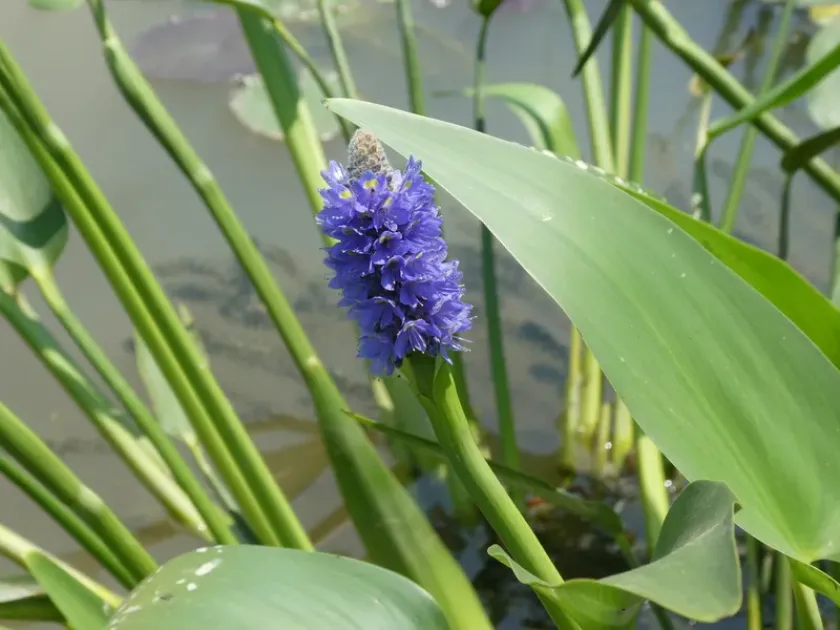
Pontederia lanceolata, commonly known as lance-leaved pickerelweed, is a perennial aquatic or semi-aquatic herbaceous plant belonging to the Pontederiaceae family. It is characterized by robust rhizomes and lance-shaped, leathery leaves that often emerge above the water surface.
The stems are upright and can reach heights of 50–80 cm. The leaf blade features distinct venation, giving it a characteristic appearance. A notable feature is the spike inflorescence, consisting of small blue-violet flowers.
Its root system is powerful and penetrates deep into bottom sediments, making the plant extremely resilient to external disturbances. The plant is capable of vegetative propagation through rhizome fragments, which complicates control efforts.
The seeds possess high buoyancy and can be dispersed by water currents over long distances. Seedlings appear primarily in shallow water or on moist banks during the spring and summer periods.
Morphologically, the species is often confused with other aquatic macrophytes, but the narrow lanceolate shape of the leaf and the specific structure of the inflorescence identify it as an aggressive colonizer.
Where it grows
The primary distribution range of Pontederia lanceolata covers tropical and subtropical regions of the Americas. In agricultural contexts, it is most frequently encountered in warm climates with developed rice production.
The plant prefers silty, nutrient-rich soils in river floodplains, lakes, and man-made water bodies. It is a typical resident of irrigation channels, where it finds optimal conditions for vegetation.
It poses a significant danger in rice paddies, where it creates dense stands, competing with the rice crop for space and essential nutrients within the aquatic environment.
The ability to withstand temporary drying of the substrate allows the plant to survive on bank strips, gradually expanding its territory as water levels rise in the reservoirs.
The spread of the species is often associated with human activity, including the movement of machinery and the contamination of seed material through irrigation from open water sources.
Harm it causes
The harmful impact of Pontederia lanceolata lies primarily in the clogging of irrigation systems and drainage channels, which leads to a reduction in water flow capacity.
In rice fields, the plant acts as a severe competitor, shading young crop shoots and consuming large quantities of macro- and micronutrients from the soil.
The mass development of this weed hinders mechanical field operations and harvesting, creating insurmountable physical barriers for machinery.
The plant contributes to the siltation of water bodies as its powerful roots trap sediments, accelerating the process of eutrophication and requiring additional costs for manual or mechanical dredging.
The presence of dense stands of pickerelweed creates favorable microclimates for the multiplication of pests and pathogens that can subsequently infect agricultural crops.
How to control
Agrotechnical methods for control include thorough cleaning and deepening of irrigation canals during the off-season to remove the plant's rhizomes.
An effective management strategy involves maintaining optimal water levels in rice paddies, which suppresses the germination of pickerelweed seeds at early stages of crop development.
Chemical control involves the application of specific systemic herbicides authorized for use in aquatic environments and rice farming.
The use of contact herbicides requires strict adherence to temperature regimes and timing, specifically targeting the plant during its phase of active growth.
Biological control methods, based on the use of specialized phytophagous insects, are currently under study and have not yet seen widespread commercial implementation.
Taxonomy
- Latin name
- Pontederia lanceolata
- Family
- Прочие
- EPPO code
- POFCL