
Water smartweed
Polygonum coccineum
Description
How to tell it apart
Water smartweed (Persicaria amphibia, syn. Polygonum coccineum) is a member of the Polygonaceae family. It is a perennial plant known for its significant phenotypic plasticity.
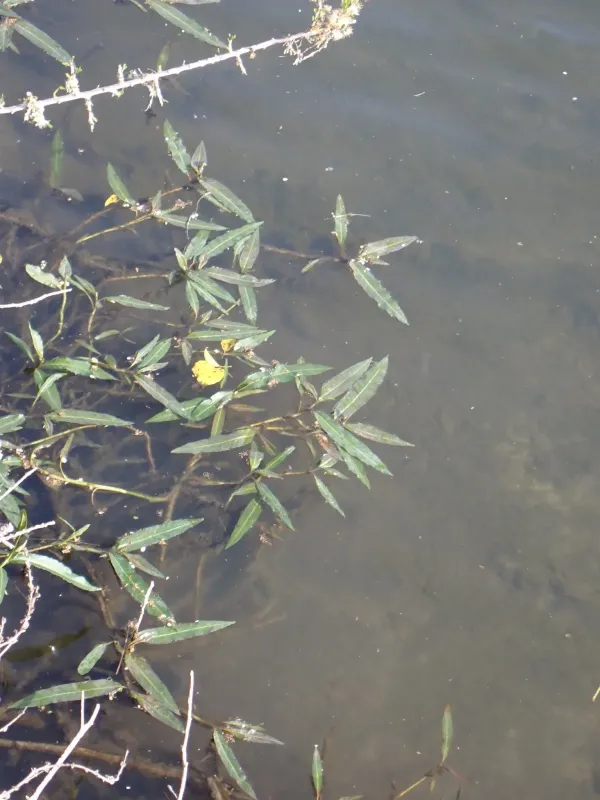
The plant has stems that can reach up to 1 meter in height. Depending on the environment, it may grow in aquatic forms with floating leaves or terrestrial forms with upright stems.
The leaves are generally lanceolate or oblong, with smooth edges and a distinct dark green color. The stems are often red-tinted, giving the plant its specific name.
The inflorescence consists of dense, spike-like racemes featuring vibrant pink or red flowers, making the plant easily identifiable during the blooming period.
Its root system is particularly aggressive, characterized by thick, creeping rhizomes that allow the plant to spread rapidly and survive adverse conditions.
Where it grows
This weed primarily thrives in moist or saturated soils, commonly found along pond margins, in wetlands, and in low-lying areas of agricultural fields.
In farming systems, it is a significant nuisance in poorly drained fields, irrigated croplands, and marshy soils where moisture levels remain constantly high.
Water smartweed is frequently found in soybean, corn, and rice fields, where its high moisture tolerance gives it a competitive edge over most crops.
It spreads efficiently through both seed dispersal and the fragmentation of rhizomes during tillage operations, which are then transported by water or machinery.
Fields with inadequate drainage or those prone to seasonal flooding are at the highest risk of heavy infestation by this persistent weed species.
Harm it causes
The primary economic impact is the severe competition for water, light, and nutrients, which significantly reduces the yield of primary agricultural crops.
The dense colonies formed by the plant physically smother crop seedlings, preventing them from accessing essential sunlight and suppressing their early growth.
Its root system depletes nitrogen and other minerals rapidly, leaving the soil infertile for the intended crops and increasing production costs for fertilizers.
High moisture levels within smartweed patches create a breeding ground for various fungal pathogens, which can then spread to adjacent healthy crop plants.
Harvesting becomes significantly more difficult due to the succulent nature of the weed, which increases moisture content in harvested grain and requires additional drying.
How to control
Agrotechnical management starts with improving field drainage, as reducing soil moisture makes the environment less favorable for this species.
Deep plowing in the autumn is essential to expose the rhizomes to winter frost, which helps in weakening and gradually eliminating the established root network.
Crop rotation that includes vigorous growing species can help shade out the weed and limit its ability to photosynthesize and accumulate starch in its roots.
Chemical control requires systemic herbicides that are capable of translocating from the leaves down into the deep rhizomes to ensure complete kill.
- Application of glyphosate on fallow fields to clear infestations.
- Selective herbicide use in corn and soybean crops during the vegetative stage.
- Consistent monitoring and spot treatment of outbreaks to prevent further spread.
Taxonomy
- Latin name
- Polygonum coccineum
- Family
- Прочие
- EPPO code
- POLCC