
Gnaphalium spicatum
Gnaphalium spicatum
Description
How to tell it apart
Gnaphalium spicatum, commonly known as a type of cudweed, is an annual or biennial herbaceous plant in the Asteraceae family. It is classified as an early spring weed.
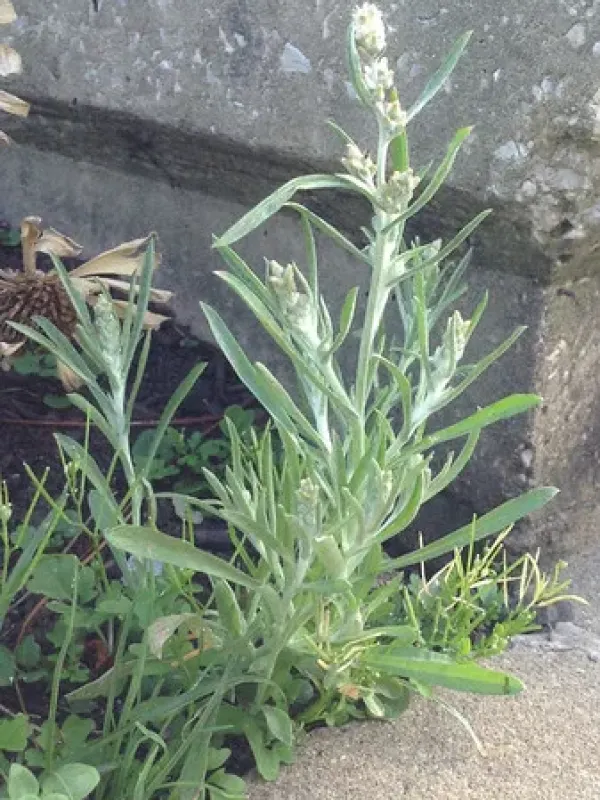
The plant grows with erect stems reaching 20 to 50 centimeters in height. The stems are typically branched at the base and covered in dense, whitish, woolly hair that gives the plant a silvery appearance.
Its leaves are linear-lanceolate, entire, and alternate. While basal leaves form a rosette that often withers before flowering, the upper leaves remain sessile along the stem.
The inflorescence consists of numerous small flower heads arranged in a dense, spicate (spike-like) cluster at the apex of the stems, which is the primary feature for identification.
The seeds (achenes) are minute and equipped with a pappus, which allows them to be easily dispersed by wind, enabling the plant to colonize new fields rapidly.
Where it grows
This species prefers open, sunny environments with light soils, such as sandy or loamy textures, though it can adapt to various conditions including nutrient-poor, acidic soils.
It is frequently found as a major weed in row crops, small grains, and fallow lands. It often colonizes disturbed sites, roadsides, and abandoned pastures.
In intensive agricultural systems, the weed thrives where there is a lack of competitive ground cover, allowing it to establish itself quickly during the early growing season.
Gnaphalium spicatum is widely distributed globally, often spreading through contaminated seed stocks or moving across borders via human and natural vectors.
Its prolific seed production ensures a persistent seed bank in the soil, which can remain dormant for several years, making eradication difficult for farmers.
Harm it causes
The primary damage caused by Gnaphalium spicatum is the competition for essential resources, including sunlight, water, and nutrients, which inhibits the growth of cultivated crops.
Heavy infestations early in the growing season can significantly stunt crop development, often leading to reduced yields and lower quality of the final harvest.
The dense foliage of this weed creates a humid microclimate within the crop canopy, which increases the risk of fungal infections and other plant diseases.
In pastures and hayfields, it acts as a competitor to nutritious forage species, reducing the overall feeding value of the vegetation for livestock.
Harvesting becomes more expensive and difficult when the weed is present, as it necessitates additional cleaning and drying of the grain to meet market standards.
How to control
Cultural control involves thorough seedbed preparation and timely mechanical cultivation to destroy seedlings before they reach the competitive stage in row crops.
Crop rotation and the use of competitive cover crops are highly effective strategies to suppress Gnaphalium spicatum by denying it the light and space it requires.
- Ensuring the use of clean, certified crop seeds.
- Regular mowing of field margins and fallow areas to prevent seed set.
- Applying systemic herbicides during the rosette stage for maximum efficacy.
- Maintaining optimal planting densities to outcompete emerging weeds.
Chemical control can be achieved using selective herbicides, such as 2,4-D or sulfonylureas, depending on the crop species and current regional regulations.
An integrated approach, combining proactive cultural practices with targeted chemical treatments, is essential to effectively manage and reduce populations over multiple seasons.
Taxonomy
- Latin name
- Gnaphalium spicatum
- Family
- Прочие
- EPPO code
- GNASP