
Soft gaura
Gaura mollis
Description
How to tell it apart
Soft gaura (Gaura mollis, commonly referred to under the genus Oenothera) is a perennial herbaceous plant belonging to the Onagraceae family.
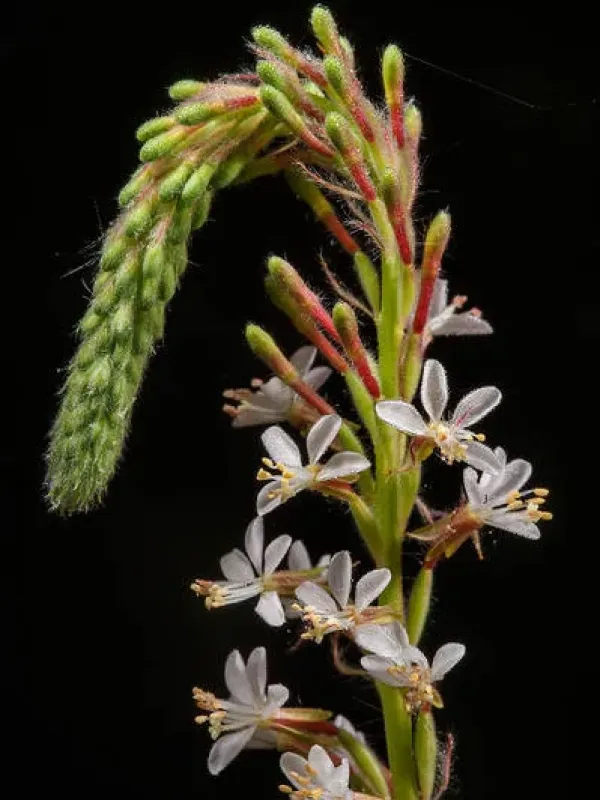
The plant is characterized by stems covered in soft, fine hairs, which gives it a distinct texture. Its leaves are generally lance-shaped and alternate along the stem.
It produces terminal racemes of flowers, typically featuring four petals that transition from white to pink as they age.
The fruit is a small seed capsule that facilitates rapid dispersal through wind, water, and agricultural machinery across fields.
Its biological resilience is underpinned by a robust root system, allowing the plant to regenerate effectively after mechanical disturbance.
Where it grows
This weed thrives in sunny, well-lit environments and is frequently found in uncultivated areas, field edges, and along roadsides.
It shows a preference for well-drained, sandy, or light soils, where it can quickly establish itself and compete with neighboring vegetation.
In agricultural settings, it often encroaches into cultivated fields from adjacent waste grounds, establishing persistent patches that are difficult to eradicate.
Its high adaptability makes it a common weed in warm-climate regions where the growing season is extended, providing ample time for reproduction.
The movement of seeds via farm equipment during cultivation practices is a major factor in the colonization of new agricultural areas.
Harm it causes
The primary damage caused by soft gaura is intense resource competition, where it depletes soil moisture and essential nutrients required by crops.
By forming dense patches, the weed shades out developing crop seedlings, which significantly reduces the efficiency of photosynthesis and overall plant vigor.
Infestations of this species can lead to uneven crop development, resulting in lower grain quality and reduced yields at harvest time.
Soft gaura also acts as an alternative host for various pests and diseases, which can spread to commercial crops, necessitating additional pesticide applications.
The presence of this weed complicates mechanical harvesting processes and increases post-harvest cleaning costs due to seed contamination.
How to control
Mechanical control measures include deep plowing, which is essential to sever the extensive root systems and prevent the regrowth of perennial individuals.
Implementing a diverse crop rotation is highly effective, as it disrupts the growth cycle of the weed and allows for varied herbicide programs.
Frequent inter-row cultivation during the early stages of crop development is vital to exhaust the weed's energy reserves and prevent it from establishing a foothold.
Chemical control focuses on the use of systemic herbicides applied during the plant's active growth phases to ensure translocation to the roots.
- Applying glyphosate-based herbicides on fallow land to clear infestations before planting.
- Using selective herbicides within crops to manage broadleaf weed pressure.
- Integrating cultural practices such as early seeding to allow the crop to outcompete emerging weeds.
Taxonomy
- Latin name
- Gaura mollis
- Family
- Прочие
- EPPO code
- GAAMO