
Nettle-leaved goosefoot
Chenopodium paganum
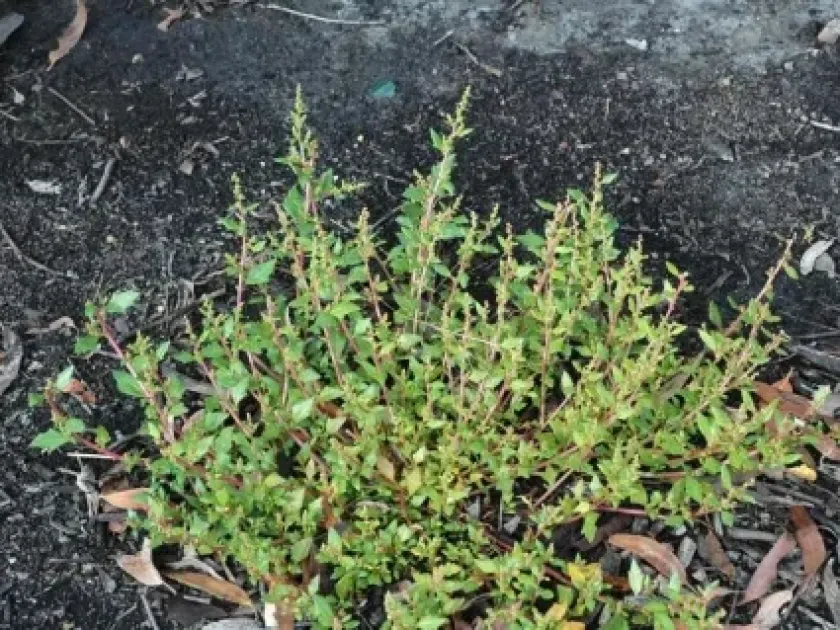
Description
How to tell it apart
Nettle-leaved goosefoot (Chenopodium paganum) is an annual herbaceous weed belonging to the Amaranthaceae family. It is widely recognized in agricultural areas due to its aggressive growth pattern and ability to adapt to diverse environments.
The plant features a branched, upright stem that can grow up to 1 meter in height. Its leaves are rhombic-ovate, often covered with a mealy, grayish-white bloom that distinguishes it from other related species.
It produces small, inconspicuous green flowers organized in dense panicles at the ends of branches and leaf axils. Flowering typically occurs from early summer through autumn, allowing for continuous seed production.
The root system consists of a robust, deep-penetrating taproot. This morphology provides the plant with superior access to groundwater, enabling it to thrive even during mid-summer dry spells.
Seeds are small, black, and lenticular. They are highly persistent in the soil seed bank, remaining viable for many years, which makes long-term management of the weed particularly challenging for farmers.
Where it grows
This weed is commonly found in disturbed sites, including arable land, vegetable gardens, road verges, and waste areas. It prefers nitrogen-rich, well-aerated soils, which are typical for intensive crop production.
It is a significant competitor in row crops such as maize, sunflowers, and sugar beets. The weed exploits the open space between crop rows, rapidly colonizing areas where the canopy has not yet closed.
Due to its high ecological plasticity, the nettle-leaved goosefoot can survive in various soil types, from heavy clays to light sandy loams, adapting its growth rate to local moisture and nutrient availability.
Seed dispersal is mainly facilitated by human activity, including contaminated agricultural machinery, wind, and irrigation water. Poorly cleaned seed stocks often serve as the primary source of initial field infestation.
The presence of this species on field edges and non-crop areas often acts as a reservoir for recurring infestations, requiring farmers to manage perimeter vegetation as part of an integrated program.
Harm it causes
The primary damage caused by nettle-leaved goosefoot is intense nutrient and moisture competition. By rapidly outgrowing early crop stages, it deprives seedlings of the essential resources needed for robust development.
Shading is another critical factor; the weed's broad foliage suppresses the photosynthesis of crop plants, resulting in stunted growth, lower biomass accumulation, and ultimately, significantly reduced yields.
It serves as a secondary host for several agricultural pests, such as aphids, and can harbor various viral and fungal diseases that spread to crops, leading to further quality and quantity losses.
Harvesting becomes more difficult and costly when this weed is present, as it increases the moisture content of the harvested crop and necessitates complex, multi-stage cleaning and drying procedures.
Allelopathic interference, where the plant releases biochemical substances into the soil through its roots, can inhibit the growth of surrounding crop roots and beneficial soil microorganisms.
How to control
Successful management begins with integrated cultural practices, including well-planned crop rotations that interrupt the life cycle of the weed. Mechanical cultivation is highly effective when performed on young seedlings.
Optimizing crop density to ensure rapid canopy closure is essential. A closed canopy effectively shades the ground, preventing nettle-leaved goosefoot seeds from germinating and establishing themselves successfully.
Chemical control involves the timely application of systemic herbicides. It is crucial to target the weed during its early growth phases (cotyledon to 2-leaf stage) for maximum efficacy before the plant develops chemical resistance.
Tank mixing different herbicide modes of action is recommended to mitigate the risk of developing herbicide-resistant populations, which is becoming an increasing concern in global agriculture.
- Regular mechanical weeding in row crops.
- Using high-quality, certified weed-free crop seeds.
- Timed herbicide application according to growth stage.
- Sanitation of agricultural equipment between fields.
- Management of boundary zones to prevent seed migration into fields.
Taxonomy
- Latin name
- Chenopodium paganum
- Family
- Прочие
- EPPO code
- CHEPA