
Euphorbia erythrina
Euphorbia erythrina
Description
How to tell it apart
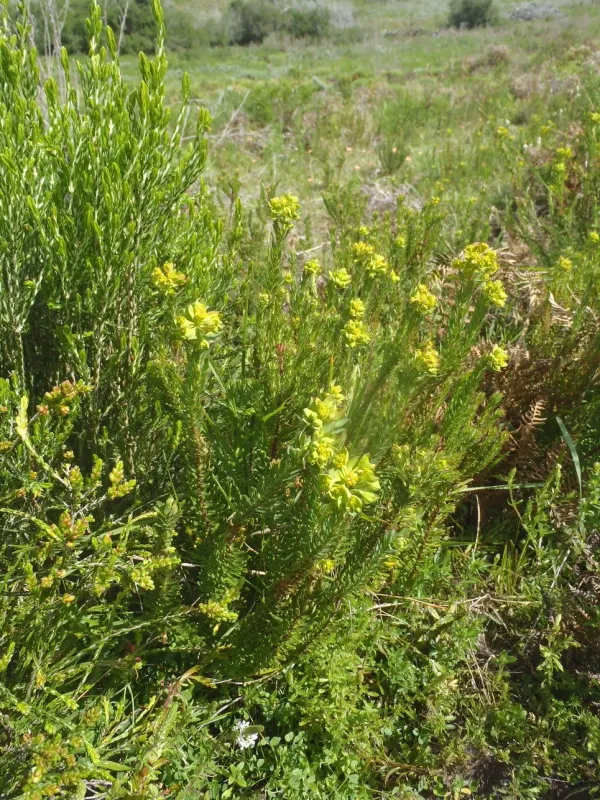
Euphorbia erythrina belongs to the Euphorbiaceae family. It is a perennial herbaceous plant characterized by a well-developed root system.
A distinctive feature is the milky sap released when the stem or leaves are damaged. This sap contains toxic compounds, rendering the plant unpalatable to most livestock.
The stems are erect, often branched in the upper part, and covered with narrow linear or lanceolate leaves. The inflorescences are typical cyathia gathered in umbel-like structures.
The root system is powerful and penetrates deep into the soil, ensuring high resilience during drought periods. The plant is capable of vegetative propagation through rhizome segments.
Seeds are produced in three-chambered capsules that may split open upon maturation, dispersing seeds over significant distances.
Where it grows
This species prefers open areas with high light intensity. It is frequently found in fallow lands, roadsides, and uncultivated edges of fields.
Euphorbia erythrina actively infests cereal crops and row crops, particularly in regions with a temperate climate.
The plant adapts to various soil types, including sandy and loamy soils, though it is most aggressive in loose, fertile lands.
Within agroecosystems, the weed often localizes in areas with disturbed vegetation cover or following poor soil tillage practices.
Its high competitiveness allows it to quickly occupy gaps between crop plants, forming dense thickets.
Harm it causes
The primary damage lies in intense competition with crop plants for water and mineral nutrients during critical growth stages.
The presence of toxic milky sap complicates hay harvesting in infested areas, as ingestion of plant material can cause poisoning in livestock.
The weed significantly reduces crop yields by creating shade and depleting soil moisture around its root system.
Euphorbia erythrina acts as a reservoir for various pathogens and pests that may subsequently migrate to commercial crops.
The labor-intensive nature of removing this perennial weed leads to a substantial increase in operational costs for farms.
How to control
The primary agrotechnical method for control is deep plowing, which severs the root system and prevents vegetative reproduction.
Crop rotation is an effective practice, including the cultivation of dense forage crops that suppress weeds through shading.
For row crops, regular inter-row cultivation is recommended, as it exhausts the nutritional reserves stored in the plant's roots.
Chemical control involves the use of systemic herbicides based on glyphosate (in fallow fields) or selective products for dicot weed management in crops.
It is crucial to perform treatments during the active growth phase before flowering to prevent seed set and ensure the maximum depletion of the root system.
Taxonomy
- Latin name
- Euphorbia erythrina
- Family
- Молочайные
- EPPO code
- EPHEH