
Croton setigerus
Croton setigerus
Description
How to tell it apart
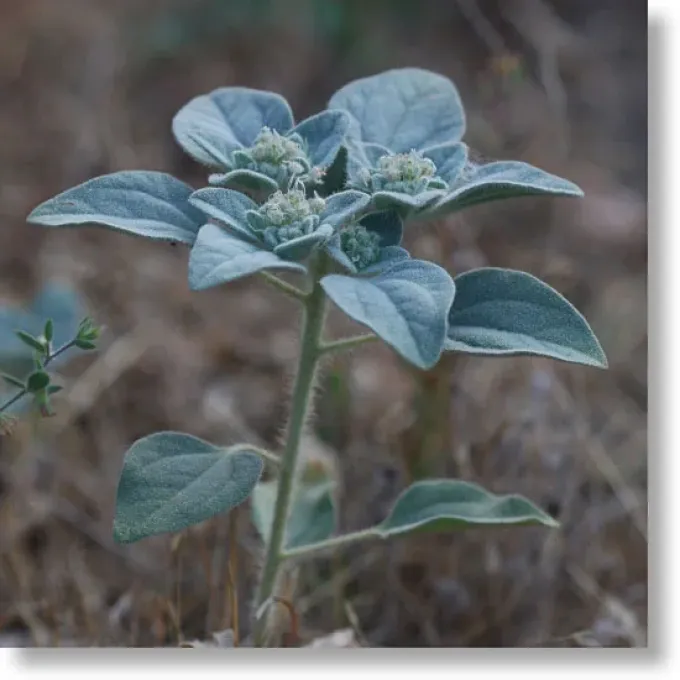
Croton setigerus, commonly known as turkey mullein, is an annual herbaceous plant belonging to the Euphorbiaceae family. It typically grows as a low, spreading bush that can form dense mats over the soil surface.
The plant is easily identified by its grayish-green leaves, which are covered with fine, stiff, and stinging hairs, giving the foliage a rough, sandpaper-like texture.
Its stems branch extensively from the base, creating a sprawling growth habit. The flowers are small, inconspicuous, and clustered, often appearing during the warmer months of the year.
It possesses a deep taproot, which allows the plant to thrive in dry conditions where other plants might struggle, making it highly resilient to drought and poor soil quality.
Like many members of the Euphorbiaceae family, the plant produces a specific odor when crushed, and its tissues contain compounds that are toxic to both humans and livestock.
Where it grows
Croton setigerus is native to western North America, widely distributed across parts of the United States and Mexico. It prefers open, sun-exposed areas with minimal competition.
Common habitats include disturbed soils, pastures, rangelands, roadsides, and abandoned fields. It is particularly successful at colonizing gaps in vegetation or degraded lands.
In agricultural settings, it can infiltrate crop fields, particularly in arid or semi-arid regions, where it competes effectively for limited water and nutrient resources.
The plant is highly adaptive and can colonize various soil types, including rocky or nutrient-poor substrates, allowing it to establish itself in environments where crops may already be stressed.
Its seeds are highly mobile and can be dispersed by wind, water, or through the digestive systems of livestock, facilitating rapid colonization of new areas within an agricultural landscape.
Harm it causes
The primary concern regarding Croton setigerus is its toxicity to livestock. Ingestion of the plant by cattle, sheep, or horses can cause severe poisoning, leading to health decline or death.
As a weed, it competes intensely with crops for vital resources such as moisture, sunlight, and soil nutrients, directly leading to yield reductions in infested fields.
The presence of this weed complicates mechanical harvesting processes and may contaminate harvested grain, requiring additional processing steps and reducing the market value of the crop.
On rangelands, it displaces desirable forage species, significantly reducing the carrying capacity of pastures and the overall productivity of livestock operations.
Furthermore, because the toxins remain potent even after the plant has been dried, contaminated hay remains a significant risk for livestock poisoning during winter feeding periods.
How to control
Cultural control methods involve strict crop rotation and timely soil cultivation to destroy seedlings before they reach the reproductive stage and set seed.
On pastures, regular mowing or grazing management during the early growth phase can help suppress the plant and prevent it from becoming the dominant species in the rangeland.
Chemical control utilizing selective systemic herbicides is often necessary for larger infestations. The application must be timed carefully to correspond with the weed's most susceptible growth phase.
Effective management requires an integrated approach that combines mechanical removal with chemical interventions while adhering to safety protocols to prevent environmental contamination.
- Regular monitoring and early detection of weed patches.
- Maintenance of a healthy crop canopy to outcompete weed seedlings.
- Use of high-quality, weed-free seeds for planting.
- Management of field margins and surrounding non-crop areas to limit seed dispersal.
Taxonomy
- Latin name
- Croton setigerus
- Family
- Молочай
- EPPO code
- ERMSE