
Acalypha virginica
Acalypha virginica
Description
How to tell it apart
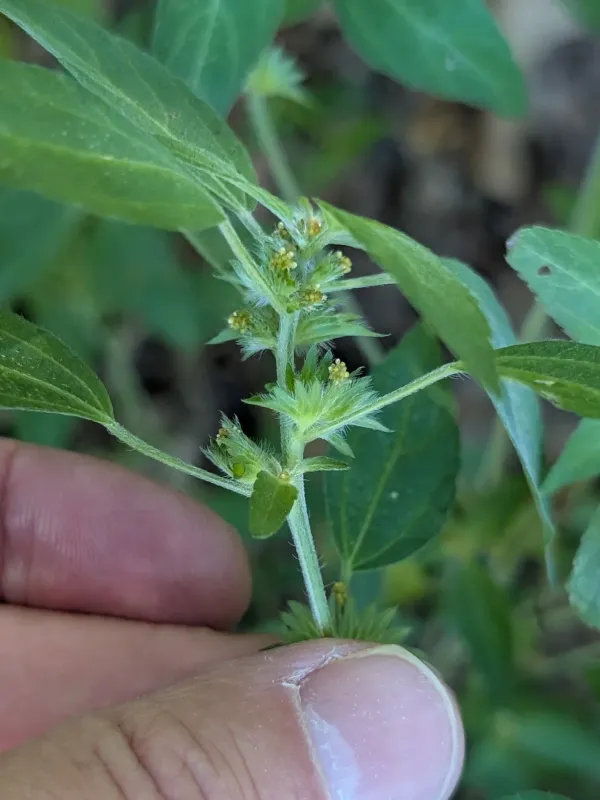
Acalypha virginica, commonly known as Virginia copperleaf, is an annual herb belonging to the Euphorbiaceae family. It typically grows as a simple or branched erect stem, usually ranging from 20 to 50 cm in height.
The leaves are alternate, ovate to rhombic-ovate in shape, and feature finely serrated margins. The surface of the leaves is often sparsely pubescent, which serves as a key characteristic for field identification.
The plant produces monoecious flowers arranged in axillary inflorescences. The female flowers are protected by prominent leafy bracts that enclose the flower clusters, often helping the plant survive adverse conditions.
Its root system is a well-developed taproot that allows the weed to access moisture efficiently, making it quite competitive even during dry spells in the growing season.
The fruits are small, three-lobed capsules that house seeds. As the plant matures, these capsules shatter, dispersing seeds into the soil and contributing to a persistent long-term seed bank.
Where it grows
This species thrives in open, sunny environments. It is commonly found in disturbed soils, including agricultural fields, gardens, and along roadsides where competitive cover is minimal.
Acalypha virginica shows high adaptability to various soil textures but prefers moist, well-drained loamy soils. It readily colonizes areas with low vegetation cover or poor management practices.
It poses a significant challenge in row crops such as soybeans, corn, and sunflowers, where it can quickly establish itself and crowd out young crop seedlings during the early vegetative stage.
Dispersal is primarily facilitated by agricultural machinery, as seeds easily stick to equipment or move through contaminated soil during tillage and harvesting operations.
Due to its opportunistic nature, it is a frequent invader of fields that have undergone soil disturbance, effectively utilizing the available light and space before the canopy closes.
Harm it causes
The primary damage caused by Acalypha virginica is its aggressive competition for essential resources, including water, soil nutrients, and light, which directly reduces the yield potential of the primary crop.
By shading out smaller crop seedlings during their critical growth period, the weed suppresses their development and stunts their overall biomass accumulation, leading to uneven crop stands.
It can also serve as an alternative host for various pests and pathogens, potentially increasing the pressure of plant diseases within the field and complicating integrated pest management strategies.
The presence of Virginia copperleaf increases processing costs, as the seeds may contaminate the harvested grain, necessitating extra cleaning steps and reducing the overall market quality of the product.
High reproductive output, with a single plant producing thousands of seeds, ensures the weed remains a persistent threat, requiring long-term management to deplete the seed bank in the topsoil.
How to control
Mechanical control is essential and involves pre-plant tillage or harrowing to eliminate emerging weed seedlings. Inter-row cultivation is highly effective during the early stages of crop development.
Cultural practices, such as maintaining optimal crop density and proper row spacing, can help the primary crop close the canopy faster, effectively shading out the light-dependent Acalypha seedlings.
Chemical control should rely on registered herbicides that target broadleaf weeds. The choice of herbicide must be synchronized with the specific crop safety label and the weed's growth stage.
- Pre-emergence soil-applied herbicides to stop early germination.
- Post-emergence applications when the weed is in the 2-4 leaf stage for maximum efficacy.
- Thorough equipment cleaning to prevent seed spread between different field parcels.
Integrated management is crucial, combining clean seed selection, appropriate fertilization to boost crop vigor, and targeted chemical applications to keep the infestation level below the economic threshold.
Taxonomy
- Latin name
- Acalypha virginica
- Family
- Молочайные
- EPPO code
- ACCVI