
Annual bastardcabbage
Rapistrum rugosum
Description
How to tell it apart
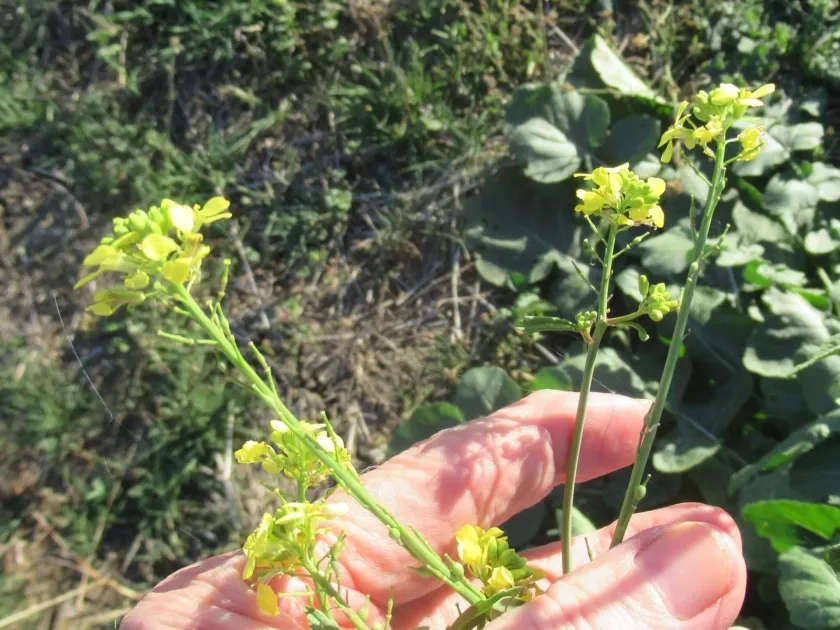
Annual bastardcabbage (Rapistrum rugosum) is a member of the Brassicaceae family. It is an annual or biennial herb characterized by a branching, erect stem that can grow up to 80-100 cm in height.
The leaves are quite distinct: basal leaves are lyrate-pinnatifid and form a rosette, while upper leaves are smaller and often serrated. The entire plant is typically covered in stiff, coarse hairs.
The flowers are yellow, small, and arranged in racemes. Blooming usually occurs throughout the summer months, allowing the plant to produce a massive amount of seeds in a single growing season.
The fruit is a distinctive two-segmented silique. The upper segment is globose, wrinkled, and contains seeds. This specific fruit structure is the most reliable feature for field identification.
The seeds are highly persistent in the soil seed bank, remaining viable for several years. This trait makes the weed particularly difficult to eradicate once it has established itself in a field.
Where it grows
Annual bastardcabbage thrives in open, disturbed habitats including arable fields, pastures, roadsides, and wasteland areas. It prefers full sunlight and well-drained soils but is adaptable to various soil types.
It is a significant weed in winter and spring cereal crops. Furthermore, it often infests row crops such as sunflowers, maize, and sugar beets, where it competes for space and resources.
The weed exhibits high environmental plasticity, allowing it to colonize even saline or compacted soils where other species might struggle. This adaptability ensures its persistence in diverse agricultural landscapes.
Seed dispersal is facilitated by agricultural machinery, wind, and movement of contaminated soil. Farmers often inadvertently spread the weed across their fields during cultivation practices.
In many regions, it acts as a pioneer species on abandoned land, quickly forming dense populations that can eventually invade nearby active agricultural production areas.
Harm it causes
The primary damage caused by this weed is its strong competitive ability. It effectively leaches nutrients and moisture from the soil, directly reducing the potential yield of crops.
It serves as an alternative host for various pests and diseases that affect commercial crops. For instance, it can harbor pathogens common to the Brassicaceae family, facilitating their spread.
Annual bastardcabbage is a favorite food source for flea beetles. These pests frequently migrate from the weed to adjacent commercial crops, causing severe damage during the seedling stage.
Crop quality is significantly compromised by the presence of weed seeds in the harvest. This contamination often results in higher cleaning costs and can lead to downgrading of the grain's commercial value.
The physical presence of the weed at harvest time creates difficulties for harvesting equipment, leading to increased fuel consumption and potential blockages within the machinery.
How to control
Integrated weed management is essential for control. Crop rotation is one of the most effective strategies, as it interrupts the life cycle of the weed and allows for varied herbicide programs.
Mechanical cultivation remains a cornerstone of control. Proper primary tillage, such as deep plowing, helps bury seeds to depths where they are unable to emerge, effectively reducing the population.
Inter-row cultivation in row crops helps eliminate seedlings before they reach a stage of rapid growth, thereby minimizing their competitive impact on the crop.
- Application of selective post-emergence herbicides in the seedling stage.
- Use of soil-applied herbicides to manage emergence from the seed bank.
- Mowing or destruction of weeds on field margins to prevent seed rain.
Chemical control must be timely, targeting the weed in its early growth stages. Due to potential resistance development, rotating different herbicide modes of action is highly recommended.
Taxonomy
- Latin name
- Rapistrum rugosum
- Family
- Крестоцветные
- EPPO code
- RASRU