
Wall rocket
Diplotaxis muralis
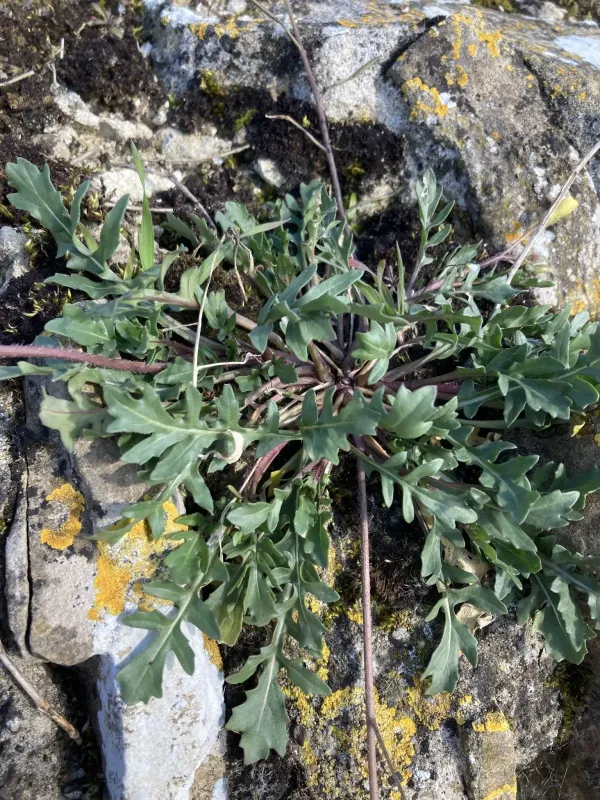
Description
How to tell it apart
Wall rocket (Diplotaxis muralis) is a member of the Brassicaceae family. It is an annual or short-lived perennial plant that typically grows to a height of 10 to 50 centimeters.
The plant is characterized by a basal rosette of leaves that are deeply lobed or pinnate. The leaves have serrated margins, which is a common trait among many related cruciferous species.
The flowers are small, yellow, and arranged in loose racemes. Flowering occurs over a prolonged period from late spring through autumn, allowing the plant to produce multiple generations of seeds.
The fruit is a long, slender silique (pod) held on a distinct pedicel. The seeds are minute and brownish, often produced in large quantities and exhibiting high germination rates.
It possesses a strong taproot that enables the plant to thrive in compacted or nutrient-poor soils where competitive pressure from other vegetation is relatively low.
Where it grows
Wall rocket is primarily a ruderal species, commonly found in disturbed areas such as roadsides, wasteland, construction sites, and railway embankments where soil is exposed.
In agricultural settings, it frequently invades vegetable plots, row crops, and cereal fields, particularly those with neutral or slightly alkaline soil conditions.
The plant favors sunny locations and thrives in calcium-rich soils. It is often observed on land that has been cleared or altered, as it is an opportunistic colonizer of such sites.
Its geographical distribution is extensive across Europe, and it has spread to many other regions globally due to human activity, including the movement of contaminated machinery and agricultural goods.
As an adaptive species, wall rocket is capable of establishing itself in various climates, often becoming a persistent component of the weed flora in managed landscapes.
Harm it causes
The main harm caused by wall rocket is its competition with crops for essential resources like sunlight, moisture, and soil nutrients, which leads to reduced yields.
As a member of the cabbage family, it acts as an alternative host for various pests and diseases that also affect commercial crops such as canola, mustard, and cabbage.
The presence of this weed creates complications during the harvesting process, potentially contaminating grain samples and lowering the overall quality of the agricultural product.
Evidence suggests that wall rocket may produce allelopathic compounds that can inhibit the growth of beneficial soil microorganisms and surrounding crops, further reducing land productivity.
Its ability to produce large quantities of seeds that can persist in the soil seed bank for several years makes it a difficult weed to eradicate completely from farm fields.
How to control
The primary control method for wall rocket is consistent mechanical soil cultivation, such as plowing or discing, which prevents the plants from reaching the reproductive stage.
Crop rotation serves as an effective management strategy; including competitive, fast-growing crops can shade out the wall rocket and significantly reduce its population density.
Chemical control is feasible using selective herbicides that target broad-leaved weeds. Application timing is critical, targeting the weed at the seedling or rosette stage for maximum efficacy.
Managing the margins of fields and keeping surrounding areas free of weeds prevents the dispersal of seeds into active cropping areas, which is essential for long-term field hygiene.
- Regular mechanical weeding and cultivation
- Use of registered selective herbicides
- Strategic crop rotation to improve competition
- Mowing field edges to prevent seed dispersal
- Monitoring for new infestations after soil disturbance
Taxonomy
- Latin name
- Diplotaxis muralis
- Family
- Крестоцветные
- EPPO code
- DIPMU