
Lepidium oblongum
Lepidium oblongum
Description
How to tell it apart
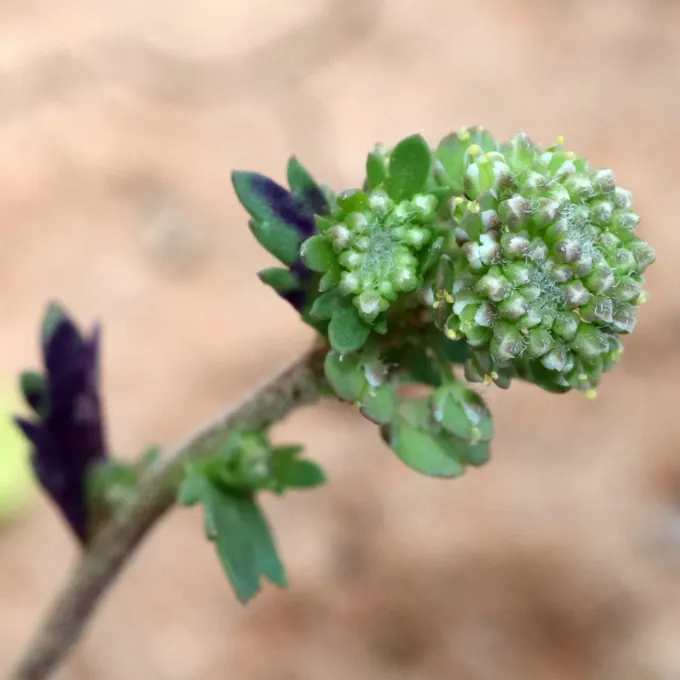
Lepidium oblongum, commonly known as a type of pepperweed, belongs to the Brassicaceae family. It is an annual herbaceous plant featuring an erect, often branched stem that typically reaches heights between 10 and 30 centimeters.
The leaves are characterized by an oblong shape, frequently appearing pinnately lobed or dentate. Both the stems and leaves are often covered in fine, short hairs, which can give the plant a grayish or dull appearance.
The flowers are arranged in dense racemes, appearing small and white or greenish-yellow in color. Following flowering, the plant produces characteristic silicles, which are flattened pods containing small, dark seeds.
The root system is taprooted and robust, allowing the plant to compete effectively for deep-soil moisture and essential minerals, which is a major factor in its survival as a weed.
The plant completes its life cycle by shedding a large number of seeds that can remain dormant in the soil for several seasons, ensuring persistent regrowth in subsequent years.
Where it grows
This weed is a common ruderal species, typically found in disturbed areas such as roadsides, vacant lots, agricultural field margins, and near human settlements.
In agricultural settings, Lepidium oblongum thrives in grain fields, row crops, and vegetable gardens. It is particularly aggressive in areas with disrupted soil structures or poor ground cover.
The plant prefers sunny locations with well-drained soil but demonstrates high ecological plasticity, allowing it to adapt to a variety of environmental and soil conditions.
It is frequently observed in intensive farming zones, where it spreads along the edges of fields and gradually encroaches upon the inner plots if standard crop rotation is ignored.
Dissemination is primarily achieved through seeds, which are dispersed by wind, water, and agricultural machinery, facilitating rapid colonization of new areas during the planting and harvesting cycles.
Harm it causes
The primary harm caused by Lepidium oblongum is its intense competition with crop seedlings for water and nutrients, particularly during the critical early stages of crop development.
Due to its dense growth habit, the weed can cause significant shading for lower-growing crops, which inhibits their development and reduces the overall rate of photosynthesis.
The plant’s root system effectively utilizes mineral fertilizers intended for the crops, leading to decreased fertilizer efficiency and reduced profitability for the agricultural operation.
As a member of the Brassicaceae family, this weed acts as a secondary host for various pests and diseases that also affect commercial crops like canola, mustard, or cabbage.
The presence of pepperweed seeds in harvested grain batches lowers the commercial value and purity of the crop, necessitating additional processing and cleaning efforts post-harvest.
How to control
Agrotechnical management strategies include deep plowing and cultivation, which are effective in burying the weed seeds at depths where they cannot successfully germinate and emerge.
Timely inter-row cultivation in row crops is essential for destroying young weed populations before they reach the flowering stage and produce new seeds.
Maintaining a strict crop rotation schedule and alternating between crops with different growing seasons disrupts the weed's life cycle and helps manage the soil seed bank.
Chemical control involves the application of selective herbicides that are approved for use in the specific crop being grown and are proven to target cruciferous weed species.
- Application of selective systemic herbicides.
- Using tank mixtures to enhance spectrum efficacy.
- Targeting the rosette stage for maximum chemical uptake.
Taxonomy
- Latin name
- Lepidium oblongum
- Family
- Крестоцветные
- EPPO code
- LEPOB