
Broad-leaved pepperwort
Lepidium latifolium
Description
How to tell it apart
Broad-leaved pepperwort (Lepidium latifolium) is a persistent perennial herbaceous plant belonging to the Brassicaceae family. It is recognized as a serious weed due to its aggressive growth habit.
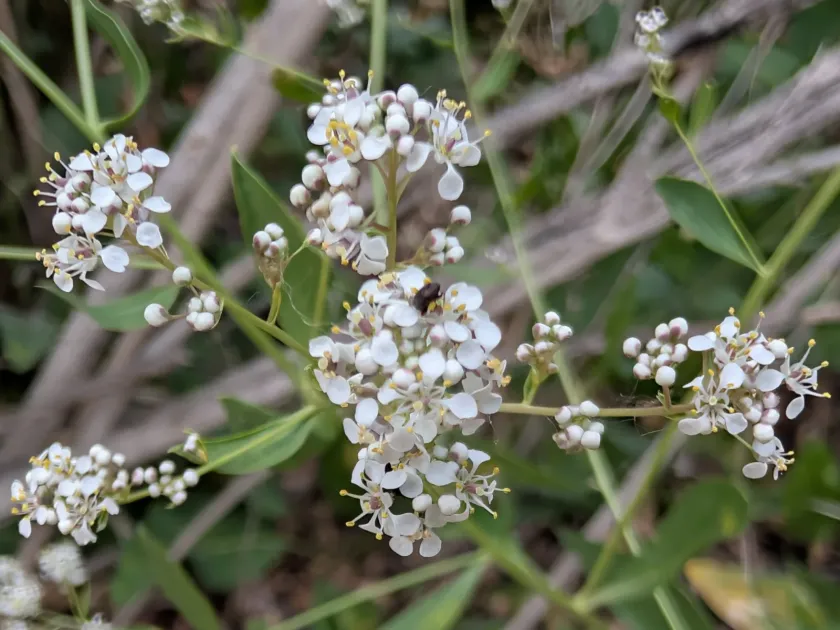
The plant grows upright, reaching heights of up to 1 meter or more, with many branching stems. It produces distinct blue-green foliage and small white flowers arranged in dense panicles.
The root system is extensive, consisting of a deep taproot and creeping lateral roots that allow the plant to regenerate from small fragments left in the soil after disturbance.
Flowering typically occurs from June through August. After pollination, the plant produces numerous small, round seed pods, each containing tiny seeds that aid in its dispersal.
One of the key identification features is the pungent, peppery smell released when the leaves are crushed, which is a common trait among many members of the mustard family.
Where it grows
Native to Europe, the Mediterranean, the Caucasus, and Central Asia, the plant has become naturalized in many parts of North America and other regions with temperate climates.
Broad-leaved pepperwort thrives in disturbed sites, including roadsides, irrigation ditches, riverbanks, and saline soils, where it can easily form monoculture stands.
In agricultural settings, it is particularly invasive in fields of alfalfa, small grains, and pastures. It is highly successful in areas where regular irrigation provides consistent moisture.
The weed is extremely adaptable to environmental conditions, showing high tolerance to both saturated soils and drought periods, which helps it establish dominance over native or crop vegetation.
It often spreads along corridors such as waterways and roads, making it a common sight in riparian areas adjacent to cultivated farmland where it can easily migrate into crop fields.
Harm it causes
The primary economic impact of this weed is its ability to compete fiercely for water and nutrients, which can significantly reduce the yields of infested crops.
Through the release of allelopathic chemicals into the soil, it inhibits the germination and growth of neighboring plants, further cementing its competitive advantage.
Heavy infestations can impede agricultural operations, such as harvesting, by creating thick, woody stems that clog machinery, leading to increased maintenance costs and operational downtime.
As a member of the Brassicaceae family, it serves as an alternative host for various pests and diseases, increasing the risk of infection for commercial crops like canola and mustard.
Seed contamination is another major issue; seeds of broad-leaved pepperwort can contaminate harvested grain, necessitating additional cleaning processes and reducing the final value of the crop.
How to control
Integrated management is necessary to control the spread of the weed. Deep tillage can help weaken the root system, although it is often insufficient on its own due to the plant's regenerative ability.
Chemical control using systemic herbicides, specifically those containing glyphosate, is often effective when applied during the active growth phase of the plant.
Maintaining competitive crop density and healthy pastures is an important cultural practice to prevent the weed from establishing new colonies in vulnerable areas.
Mechanical removal, such as mowing or cutting, should be performed before the plant sets seed to limit the expansion of the population and prevent soil seed bank accumulation.
- Repeated mechanical cultivation to exhaust carbohydrate reserves in the roots.
- Targeted herbicide applications on established patches to prevent further spread.
- Strict biosecurity measures for agricultural equipment to avoid spreading root fragments.
- Integration of crop rotation to create conditions unsuitable for long-term infestation.
Taxonomy
- Latin name
- Lepidium latifolium
- Family
- Крестоцветные
- EPPO code
- LEPLA