
Apetalous peppergrass
Lepidium densiflorum
Description
How to tell it apart
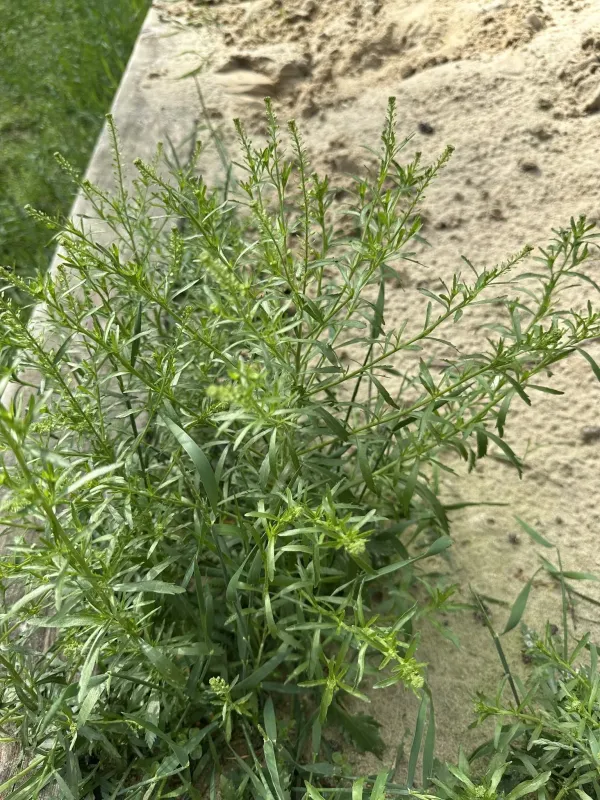
Apetalous peppergrass (scientific name Lepidium densiflorum) is a herbaceous annual or biennial plant belonging to the Brassicaceae family.
The plant typically grows with a single upright stem that branches in the upper sections, reaching heights of 15 to 40 centimeters.
Leaves are alternate; basal leaves are often toothed or lobed, while the upper stem leaves are narrower, lanceolate, and entire.
It produces dense, terminal racemes of tiny, greenish-white flowers that elongate significantly as the plant matures and produces seeds.
The fruit is a small, flattened, rounded-oval silicle (pod) with a slight notch at the apex, which is a key morphological feature for identification.
Where it grows
Originating from North America, this species has been introduced into most European countries, where it is now considered an invasive weed.
It thrives in disturbed habitats, including roadsides, waste areas, riverbanks, and agricultural fields with disrupted soil structures.
In agricultural settings, it frequently infests cereal crops, row crops, and managed grasslands, often colonizing open patches of soil.
The plant demonstrates high adaptability, flourishing in various soil types, from dry, sandy soils to more nutrient-rich agricultural lands.
Its ability to establish in open environments allows it to form dense, competitive stands that displace native vegetation and crop seedlings.
Harm it causes
The primary damage caused by Apetalous peppergrass is its aggressive competition for essential nutrients, water, and sunlight in arable fields.
By competing for resources early in the growing season, it can stunt the growth of cash crops, resulting in significant yield losses.
The presence of this weed in harvested grain creates contamination issues, leading to increased costs for cleaning and processing the final product.
Due to its high seed production and long seed dormancy, it builds up a significant soil seed bank, making recurring infestations likely.
Furthermore, as a member of the Brassicaceae family, it can act as an alternative host for various pests and diseases that affect commercial crops.
How to control
Effective management includes integrated practices such as strict crop rotation, which breaks the weed's life cycle by changing cultivation timing.
Mechanical control through timely harrowing and inter-row cultivation is highly effective when performed before the weed reaches the flowering stage.
Chemical control involves the application of selective post-emergence herbicides, particularly those labeled for broad-leaved weed control in cereals.
Maintaining clean field borders and managing uncultivated areas around the farm is crucial to preventing the encroachment of new seeds.
- Regular monitoring of crop fields for early emergence.
- Use of weed-free, certified seed for sowing.
- Application of herbicides compatible with the specific crop rotation.
Taxonomy
- Latin name
- Lepidium densiflorum
- Family
- Крестоцветные
- EPPO code
- LEPDE