
Buenos Aires pepperwort
Lepidium bonariense
Description
How to tell it apart
Buenos Aires pepperwort, botanically known as Lepidium bonariense, is a member of the Brassicaceae family. It is an annual or biennial plant that grows to approximately 60 cm in height.
The plant features distinct leaves: the basal ones are pinnately divided, while the upper leaves are linear or lanceolate, often with slightly serrated or smooth edges.
It produces terminal racemes of small, white flowers that are typical for the mustard family. These flowers appear in dense clusters at the top of the branching stems.
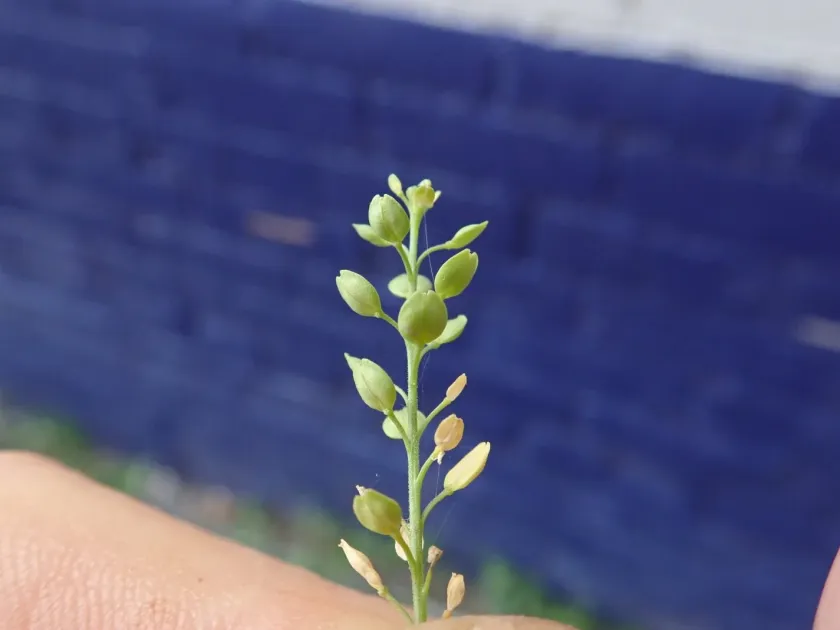
The fruits are small, flattened, circular silicles with a notched tip. These pods hold numerous seeds that are easily dispersed by wind, water, or mechanical means.
The species is recognized by its prolific seed production, allowing it to colonize disturbed sites rapidly and establish competitive populations within short periods.
Where it grows
This weed is commonly found in disturbed areas, roadsides, fields, and fallow lands. It prefers well-lit environments and adapts well to various soil compositions.
It causes significant problems in cereal crops, row crops, and pastures. The weed thrives in areas with high moisture, often invading irrigated croplands.
Seeds are frequently spread across fields via agricultural machinery, contaminated seed lots, and natural elements like wind and runoff during heavy rainfall.
The plant has a broad ecological tolerance, allowing it to survive in both sandy and clay-based soils, which contributes to its status as a widespread weed.
Once established in a field, it can persist for several seasons due to the longevity of its seeds in the soil seed bank.
Harm it causes
Buenos Aires pepperwort competes aggressively with crops for essential soil nutrients, moisture, and sunlight, leading to measurable losses in crop yield.
In young crops, early-season infestation can severely stunt development, as the weed grows rapidly and quickly covers the available space for the crop.
The plant acts as a reservoir for pests and pathogens that affect other cruciferous crops, increasing the pressure of disease and insects on farm fields.
Contamination of harvested grain with the seeds of this weed results in increased costs for cleaning, grading, and processing, which lowers the overall profit.
Its presence in grazing lands reduces the availability of desirable forage, as it often displaces more palatable and nutritious vegetation preferred by livestock.
How to control
Mechanical control involves thorough soil cultivation and tillage practices that bring dormant seeds to the surface to germinate, followed by their eradication.
Crop rotation is an essential strategy to manage the weed population, as it disrupts the growth cycle and prevents the build-up of seeds in the soil.
Post-emergence herbicide applications are highly effective when applied during the early growth stages of the weed, before it enters the flowering phase.
Farmers should prioritize the use of certified, clean seeds to prevent the introduction of this aggressive species into healthy, weed-free farming blocks.
Maintaining clean field borders and managing non-crop areas reduces the risk of seed dispersal into main agricultural fields, ensuring better long-term control.
Taxonomy
- Latin name
- Lepidium bonariense
- Family
- Крестоцветные
- EPPO code
- LEPBO