
African peppercress
Lepidium africanum
Description
How to tell it apart
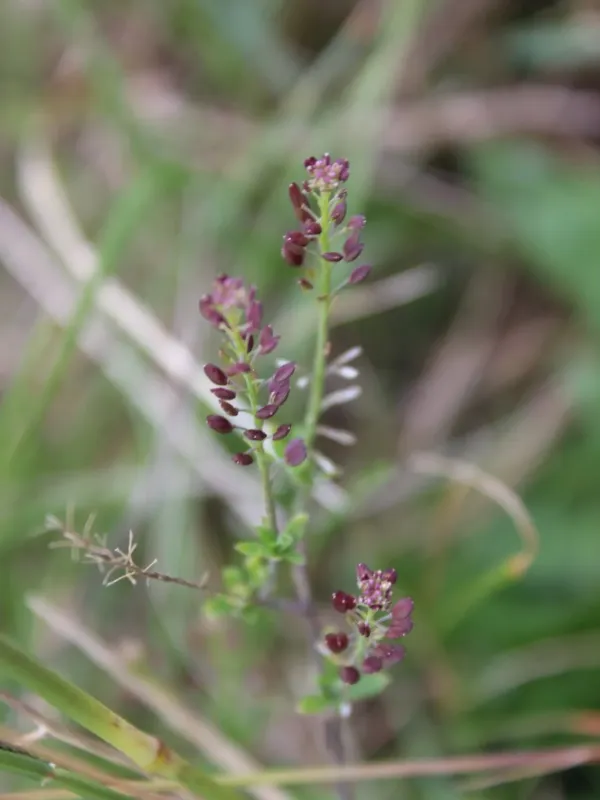
African peppercress (Lepidium africanum) belongs to the Brassicaceae family. It is an herbaceous annual or biennial plant with an erect, branched stem reaching heights of 30–60 cm.
The leaves have a distinct shape: the lower ones are pinnately dissected, while the upper ones are entire and linear-lanceolate. The plant surface is often slightly pubescent.
The flowers are small and arranged in elongated racemes. Petals are white, very short, and sometimes absent entirely.
The fruits are round or oval pods, flattened laterally. The seeds are tiny, brown, and possess high germination capacity, remaining viable in the soil for several years.
The root system is a well-developed taproot, allowing the weed to compete effectively for moisture and nutrients in the topsoil.
Where it grows
Native to South Africa, this species has become a naturalized invasive weed in many regions of the world with temperate and subtropical climates.
In agricultural systems, African peppercress is most frequently found in grain crop fields, pastures, and along roadsides or wasteland areas.
The weed prefers well-lit areas with loamy or sandy soils and is tolerant of moderate drought and saline conditions.
In agricultural practice, it infests fallow fields where it multiplies rapidly if mechanical control measures are not implemented.
It spreads actively via seeds, which are dispersed by wind, water, contaminated seed lots, or agricultural machinery.
Harm it causes
The primary damage caused by African peppercress stems from its strong competitive ability during the early growth stages of crops, particularly in winter cereals.
Due to its early emergence, the weed quickly suppresses crops by limiting their access to sunlight and essential mineral nutrients.
High levels of infestation lead to significant yield losses and reduced grain quality due to contamination with weed seeds during harvest.
The plant acts as a reservoir for various pathogens and pests affecting Brassicaceae, increasing phytosanitary risks for oilseed crops like canola or mustard.
Furthermore, the intensive growth of this weed promotes rapid depletion of soil moisture, which is critical for regions with limited rainfall.
How to control
Agronomic control measures include strict adherence to crop rotation, avoiding continuous cropping of Brassicaceae, and performing deep autumn plowing.
Timely cultivation and harrowing of fallow land are essential practices to destroy young weed seedlings before they reach the flowering stage.
Chemical control is effective when using selective herbicides from the sulfonylurea group or phenoxyacetic acid derivatives during the active growth phase.
Herbicide application must be performed in strict accordance with local regulations, considering the sensitivity of the specific main crop.
- Cleaning seed stocks to prevent weed seed spread.
- Stubble cultivation immediately after harvest.
- Applying herbicides during the early vegetative stages.
Taxonomy
- Latin name
- Lepidium africanum
- Family
- Крестоцветные
- EPPO code
- LEPAF