
Carrichtera annua
Carrichtera annua
Description
How to tell it apart
Carrichtera annua belongs to the Brassicaceae family. It is an annual herbaceous plant that typically grows to a height of 10–30 cm.
The stem is branched and covered with stiff, bristly hairs. The leaves are alternate and pinnately dissected into narrow lobes, giving the plant a delicate appearance.
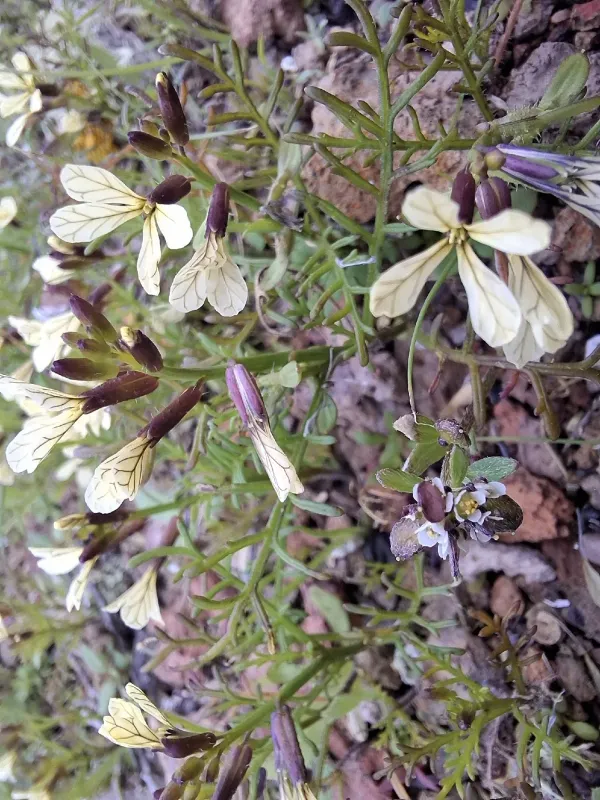
Its flowers are arranged in loose racemes. The petals are pale yellow, often featuring purple veins, which serves as a key diagnostic feature for the species.
The fruits are short, hairy siliques (pods) containing seeds that shatter easily upon maturation, facilitating the dispersal of the weed throughout the field.
This species is a typical ephemeral, capable of completing its entire life cycle rapidly when environmental conditions, particularly moisture, are favorable.
Where it grows
The plant is primarily found in arid and semi-arid regions, particularly within the Mediterranean basin and across the Middle East.
It favors open, sunny environments with sandy or stony soil types. It is commonly observed in fallow lands, along roadsides, and in desert plant communities.
In agricultural settings, it poses a risk to winter cereal crops, as it germinates alongside the crops during the cooler, wetter months.
It also colonizes pastures and uncultivated fields, where it can quickly establish dense populations if left unchecked by agricultural management.
The species is highly adapted to fluctuating temperatures and can capitalize on brief spring rains to achieve rapid vegetative growth.
Harm it causes
The primary damage caused by Carrichtera annua is competition with crops for limited soil moisture and essential mineral nutrients during the early growth stages.
High infestation levels can significantly reduce crop density and overall grain yield, especially in areas where water availability is a limiting factor.
As a member of the Brassicaceae family, the weed acts as a potential reservoir for various pests and diseases that also attack major cruciferous crops.
The prolific production of seeds contributes to a persistent soil seed bank, making the infestation a recurring problem for several growing seasons.
Contamination of harvested grain with weed seeds reduces the market value and increases costs associated with post-harvest cleaning and processing.
How to control
Agronomic management includes thorough primary tillage, such as plowing, which buries seeds deep enough to prevent successful germination in the topsoil.
Implementing a diverse crop rotation is an essential strategy to disrupt the life cycle of the weed and minimize its impact on subsequent crops.
Chemical control involves the use of selective herbicides, which should be applied during the early vegetative stage before the plant enters the flowering phase.
It is critical to follow regional agricultural guidelines regarding herbicide application rates and timing to maximize efficacy while protecting the main crop.
- Mechanical weeding through harrow usage prior to crop emergence.
- Ensuring the use of high-quality, certified seed free from weed contamination.
- Timely inter-row cultivation in widely spaced row crops.
- Monitoring field perimeters to prevent the encroachment of seeds from adjacent areas.
Taxonomy
- Latin name
- Carrichtera annua
- Family
- Крестоцветные
- EPPO code
- CRCAN