
Widgeon grass
Ruppia maritima
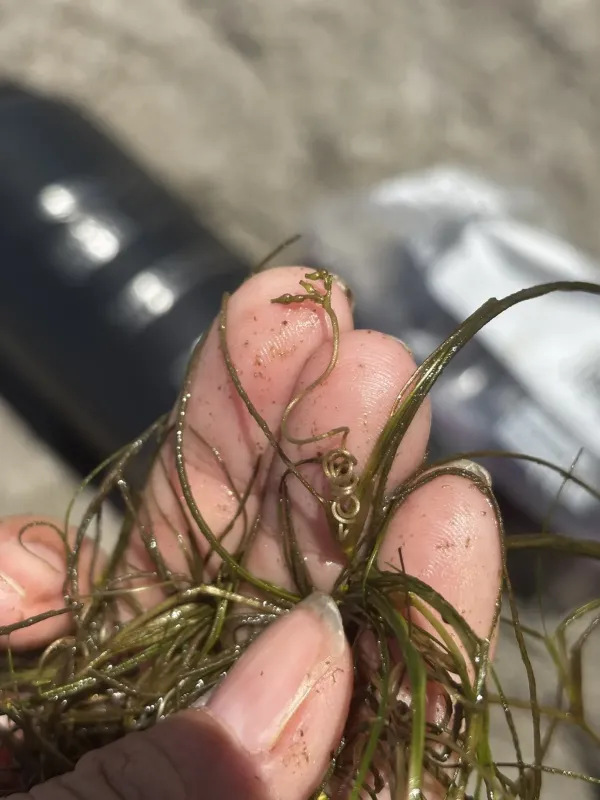
Description
How to tell it apart
Widgeon grass (Ruppia maritima) is a perennial aquatic plant belonging to the Ruppiaceae family. It features thin, branched stems that remain fully submerged in water bodies.
The leaves are slender, thread-like, and arranged alternately along the stems, allowing the plant to remain flexible in fluctuating water currents.
It utilizes a fibrous root system that secures the plant into soft, silty or sandy substrates common in shallow saline waters.
Reproduction is facilitated by spike-like inflorescences that often extend to the water surface, where pollination occurs before the fruit is submerged again.
The plant is highly resilient and can propagate vegetatively, meaning small fragments of the stem can easily colonize new areas if transported by water currents.
Where it grows
Widgeon grass typically thrives in brackish waters, including lagoons, coastal estuaries, and salt marshes, where it tolerates significant salinity shifts.
In agricultural settings, it is a significant nuisance in irrigation ditches, drainage canals, and water storage ponds where salt concentrations are elevated.
It prefers shallow, sunlit environments with organic-rich bottom sediments, which provide the nutrients necessary for its rapid growth cycle.
The species is highly adaptable to drought conditions, as seeds can remain dormant in dry lake beds or canal bottoms for long periods before germinating upon re-flooding.
It is commonly found in stagnant or slow-moving water bodies, often spreading rapidly throughout managed irrigation networks.
Harm it causes
The primary agricultural impact of Widgeon grass is the clogging of irrigation canals, which significantly reduces water flow capacity and disrupts crop watering schedules.
Dense mats of the plant trap sediments and debris, causing rapid siltation of canals, which leads to costly and frequent maintenance requirements.
In rice cultivation, Widgeon grass acts as a weed that competes for nutrients and sunlight, directly hindering the development and yield of the primary crop.
Massive die-offs of the plant in stagnant water deplete dissolved oxygen levels, potentially harming aquatic biodiversity and degrading water quality.
Irrigation pumps and filters are frequently damaged or obstructed by the accumulation of vegetation, leading to operational inefficiencies and mechanical failures.
How to control
Mechanical control, such as the use of aquatic weed harvesters or canal dredgers, is the most common and immediate method to restore water flow efficiency.
Maintaining a high velocity of water flow within channels serves as a natural preventative measure, as it prevents the plant from anchoring into the substrate.
Flushing irrigation systems with freshwater can reduce salinity levels, making the environment less suitable for Widgeon grass to flourish.
Chemical control must be approached with caution due to strict regulations regarding aquatic herbicides and the need to protect the surrounding ecosystem.
- Routine mechanical clearing of canal beds.
- Optimizing hydraulic flow rates to prevent colonization.
- Integrated management through drainage and land leveling to reduce water stagnation.
Taxonomy
- Latin name
- Ruppia maritima
- Family
- Руппия
- EPPO code
- RUPMA