
Potentilla deorum
Potentilla deorum
Description
How to tell it apart
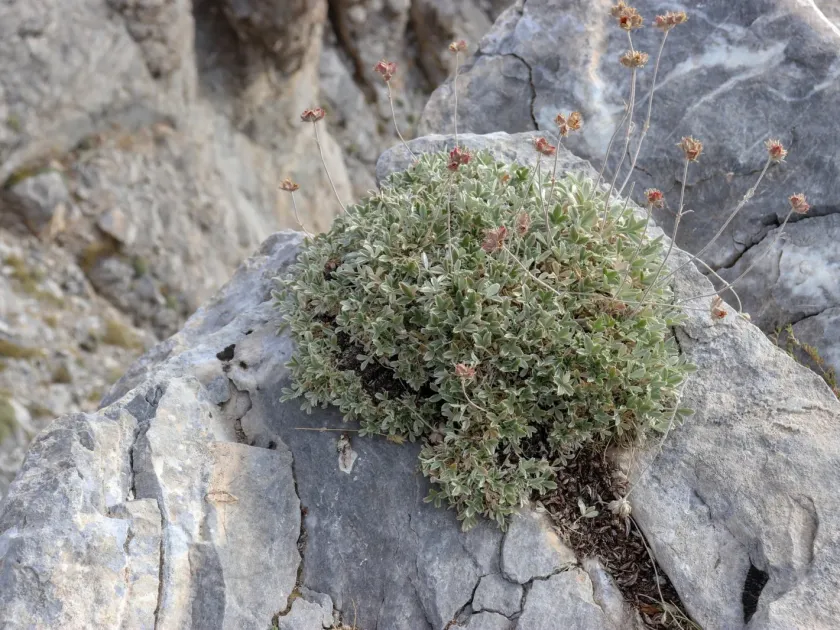
Potentilla deorum belongs to the Rosaceae family. It is a perennial herbaceous plant distinguished by its complex palmate leaves and five-petaled yellow flowers.
Morphologically, the plant features a well-developed root system, often with a lignified taproot, allowing it to survive harsh conditions and regenerate quickly.
The stems can be either erect or spreading, enabling the weed to cover the soil surface rapidly and outcompete cultivated crops for light and space.
Leaf and stem pubescence (tiny hairs) serves as a defensive mechanism against water loss, making the plant highly resilient to drought.
Flowering typically occurs in late spring, producing numerous small nutlet fruits that are easily dispersed by wind and field machinery.
Where it grows
This weed species thrives in well-lit areas and is commonly found in fallow fields, pastures, and along field edges or roadsides.
Potentilla deorum adapts to various soil types, including nutrient-poor and dry soils where standard crops may struggle to establish themselves.
It poses a significant threat to cereal fields and row crops, particularly when crop rotation practices are neglected or poorly managed.
Seeds are frequently distributed through contaminated seed material or mechanical transport via tractors and harvesting equipment.
The plant frequently emerges in early spring, establishing itself before the primary crop has developed sufficient canopy coverage.
Harm it causes
The primary damage is caused by severe competition for soil moisture and nutrients, which leads to stunted growth and reduced crop yields.
Potentilla deorum suppresses seedling emergence and development, leading to inconsistent crop stands and increased susceptibility to diseases.
The presence of dense weed clusters makes mechanical harvesting difficult, causing technical delays and increasing operational costs.
It acts as an alternative host for various pests and fungal pathogens, which can then spread to economically important crops.
If left unmanaged, the weed population increases exponentially, making future control efforts significantly more difficult and expensive.
How to control
Deep plowing remains the most effective mechanical control measure, as it disrupts the root system and buries seeds at non-germinating depths.
Regular inter-row cultivation during the early stages of crop growth is essential to minimize the establishment of young weeds.
Implementing a balanced crop rotation scheme helps reduce the weed seed bank in the soil and maintains higher crop competitiveness.
Chemical control involves the application of selective herbicides during the active vegetative growth phase of the plant.
- Application of systemic herbicides following the manufacturer's label.
- Manual or mechanical mowing of field perimeters before seed dispersal.
Taxonomy
- Latin name
- Potentilla deorum
- Family
- Розовые
- EPPO code
- PTLDR