
Monochoria vaginalis
Pontederia vaginalis
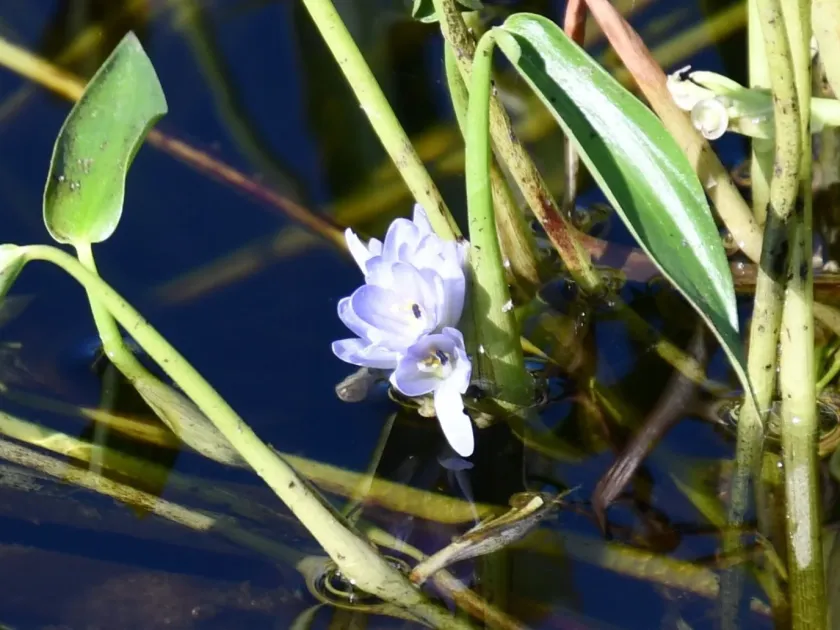
Description
How to tell it apart
Monochoria vaginalis is an annual aquatic herb belonging to the Pontederiaceae family. It is a well-known weed that thrives in wet environments and is especially problematic for rice farmers.
The plant is characterized by heart-shaped or lanceolate leaves that grow on long, succulent petioles from a basal rosette. Its roots are fibrous and anchor it firmly in the mud.
Its inflorescence consists of racemes with beautiful blue or violet flowers, each having six petals. These flowers are highly attractive to pollinators, ensuring successful seed production.
The fruit is a small, three-valved capsule containing numerous seeds. These seeds are adapted for dispersal by water, allowing them to travel easily through irrigation networks.
Morphologically, the plant can vary in size depending on water depth and nutrient availability, but it maintains its distinct aquatic growth habit throughout the season.
Where it grows
This weed is primarily found in wetland areas, specifically in flooded rice paddies, irrigation canals, and shallow ponds across Asia and other rice-growing regions.
It prefers nutrient-rich, silty soils that retain moisture throughout the growth cycle. The presence of standing water is essential for its germination and establishment.
Monochoria vaginalis is highly adaptable to fluctuations in water level, which allows it to persist even in fields managed with varying irrigation practices.
It often enters new fields through contaminated irrigation water, which carries the seeds across large distances and infestations.
The plant is most vigorous in tropical and subtropical climates where high temperatures and ample water support continuous growth.
Harm it causes
The primary damage caused by this weed is intense competition with rice crops for light, nutrients, and physical space within the flooded paddies.
It causes significant yield losses by shading young rice seedlings, which hampers their tillering and general development during the critical early stages.
By absorbing significant amounts of nitrogen and phosphorus from the water and soil, it effectively starves the rice plants of necessary fertilizers.
Large colonies of the weed can impede water circulation, creating stagnant zones that may favor the growth of other pests or pathogens affecting rice.
Furthermore, the presence of these weeds complicates mechanical harvesting and increases the cost of crop maintenance and cleaning.
How to control
Effective management begins with thorough land preparation, such as leveling the paddy fields to ensure a consistent water depth that is not conducive to weed colonization.
Crop rotation with dry-land crops can break the life cycle of this aquatic weed, as it requires a flooded environment to flourish.
Chemical control via selective herbicides is often necessary for large-scale infestations, focusing on timing applications when the weed is in its early vegetative stage.
- Apply selective post-emergence herbicides compatible with rice.
- Monitor irrigation channels for the presence of weed seeds and debris.
- Maintain adequate water management practices to limit germination.
Combining cultural practices with targeted chemical treatments is the most successful way to mitigate the impact of Monochoria vaginalis on overall rice productivity.
Taxonomy
- Latin name
- Pontederia vaginalis
- Family
- Понтедериевые
- EPPO code
- MOOVA