
Serrated surfgrass
Phyllospadix serrulatus
Description
How to tell it apart
Phyllospadix serrulatus, commonly known as serrated surfgrass, is a perennial marine plant belonging to the Zosteraceae family.
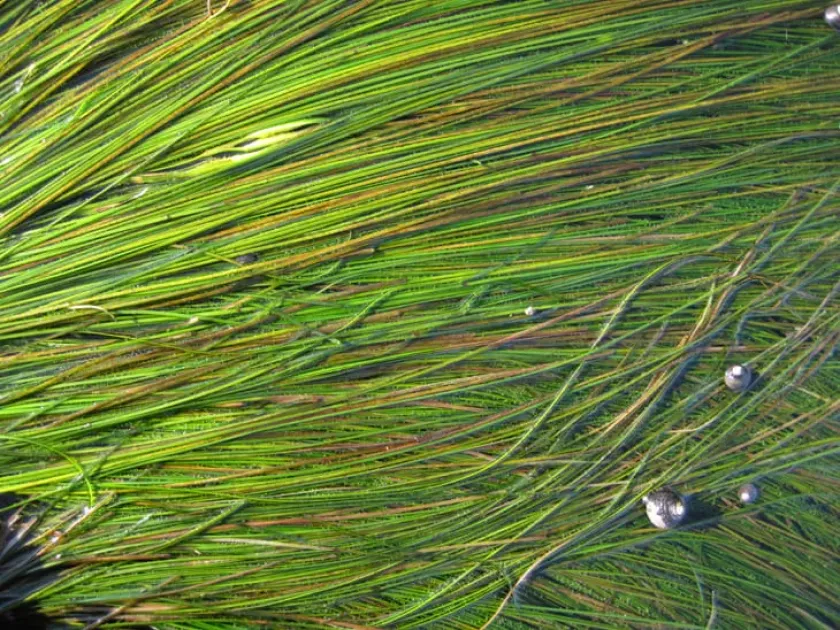
The plant is distinguished by its narrow, ribbon-like leaves, which feature characteristically serrated or toothed edges.
It forms dense mats of vegetation that attach firmly to rock substrates using a complex system of creeping rhizomes.
These plants are adapted to high-energy marine environments and are capable of withstanding strong tidal currents and wave action.
The growth pattern is primarily horizontal, allowing the plant to spread rapidly across available hard surfaces in the intertidal zone.
Where it grows
This species is native to the northern Pacific Ocean, typically colonizing rocky shorelines and shallow coastal waters.
It thrives in intertidal and shallow subtidal zones where it dominates the rocky substrate, often excluding other marine flora.
While not a threat to traditional agriculture, it acts as a significant weed in marine mariculture operations and coastal habitat management.
The plant is highly specialized for salt-water environments and requires specific rocky structures for anchor-points to establish its population.
Distribution is facilitated by the release of seeds and vegetative fragments carried by tides into new potential habitats along the coast.
Harm it causes
The main impact of serrated surfgrass is the fouling of aquaculture facilities, where it competes for space with commercially valuable species.
Dense colonies effectively prevent the settlement of other marine organisms, disrupting the natural balance of the coastal ecosystem.
Farmers face significant labor costs when attempting to remove the plant from submerged nets, ropes, and artificial reef structures.
The presence of large mats can alter local sediment dynamics, leading to the accumulation of organic matter and potential shifts in water quality.
By crowding out beneficial seaweed or shellfish, the plant reduces the overall productivity of managed marine areas.
How to control
Manual harvesting during low tide remains the primary method for controlling surfgrass populations in managed marine zones.
The use of chemical herbicides is restricted or prohibited in most marine environments to prevent damage to the broader ecosystem.
Maintenance schedules for aquaculture infrastructure should include regular cleaning to prevent the establishment of rhizome networks.
Prevention involves the use of specialized surface materials or coatings that make it difficult for the surfgrass rhizomes to gain a foothold.
Ongoing monitoring of coastal areas helps identify new infestations early, allowing for quick removal before the weed fully covers the site.
Taxonomy
- Latin name
- Phyllospadix serrulatus
- Family
- Зостера
- EPPO code
- QHXSE