
Woolly knotweed
Persicaria lanigera
Description
How to tell it apart
Woolly knotweed (Persicaria lanigera) is an annual herbaceous weed belonging to the Polygonaceae family. It is easily identified by the dense, woolly-like hairs covering its stems and leaves.
The plant features erect or ascending stems that can grow quite tall depending on the availability of soil moisture. The leaves are alternate and lance-shaped with a pointed tip.
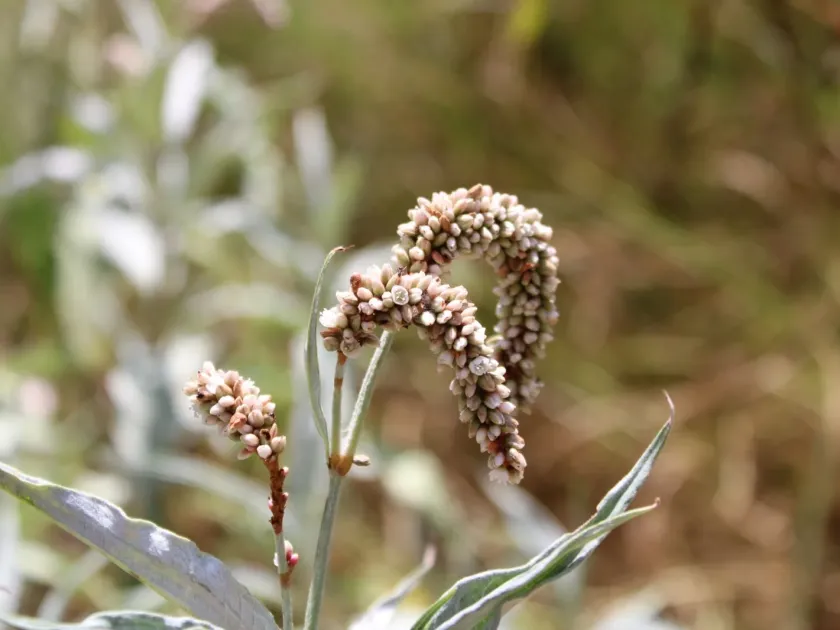
Flowers are arranged in terminal spike-like racemes. The tepals are generally greenish-white or pale pink, which provides a key diagnostic feature for the identification of this species.
Its root system is relatively vigorous, allowing the weed to extract nutrients and water efficiently, which helps it establish dominance in moist environments.
The seeds of Persicaria lanigera are hardy and can persist in the soil seed bank for extended periods, waiting for suitable conditions to germinate.
Where it grows
This species thrives in high-moisture environments, typically inhabiting riverbanks, wetlands, floodplains, and waterlogged fields where drainage is poor.
In agricultural settings, it frequently appears in irrigated crops, rice paddies, and vegetable fields situated in low-lying, damp areas of the farm.
Woolly knotweed is well-adapted to habitats disturbed by water, making it a common sight along irrigation ditches and in areas subject to occasional flooding.
The dispersal of this weed is often facilitated by water movement, as seeds can easily travel via irrigation systems or during heavy rain runoff from infested areas.
Its ability to flourish in saturated soil conditions makes it a persistent issue in regions with intensive irrigation and poor natural soil drainage.
Harm it causes
The primary damage caused by Woolly knotweed is its fierce competition for soil moisture and nutrients, which directly reduces the yield potential of crops.
By producing a large volume of foliage, the weed shades out crop seedlings, significantly reducing their access to light and stunting their early growth stages.
Presence of this weed in agricultural fields causes mechanical interference during harvesting operations, as the thick stems clog combines and agricultural machinery.
It can also serve as a secondary host for various crop pathogens and insect pests, increasing the disease pressure and pest burden on the primary crop.
Economic losses arise not only from reduced crop quality but also from the added costs of cleaning seeds and implementing intensive weed management programs.
How to control
Effective management begins with improving soil drainage and land leveling to eliminate standing water, which limits the habitat favorable for this weed.
Cultural control measures, such as deep plowing and crop rotation, are essential to break the germination cycle and exhaust the seed bank in the soil.
Using certified, weed-free seed is a critical preventative step to avoid introducing the plant into new areas or spreading it across clean fields.
Chemical control involves the application of appropriate herbicides during the active growth stages, ensuring compliance with local label instructions for crop safety.
- Monitor fields regularly during the early growing season.
- Clean farm equipment to prevent seed transport between fields.
- Mow field margins and irrigation canals to stop seed production.
Taxonomy
- Latin name
- Persicaria lanigera
- Family
- Прочие
- EPPO code
- PRALA