

Description
How to tell it apart
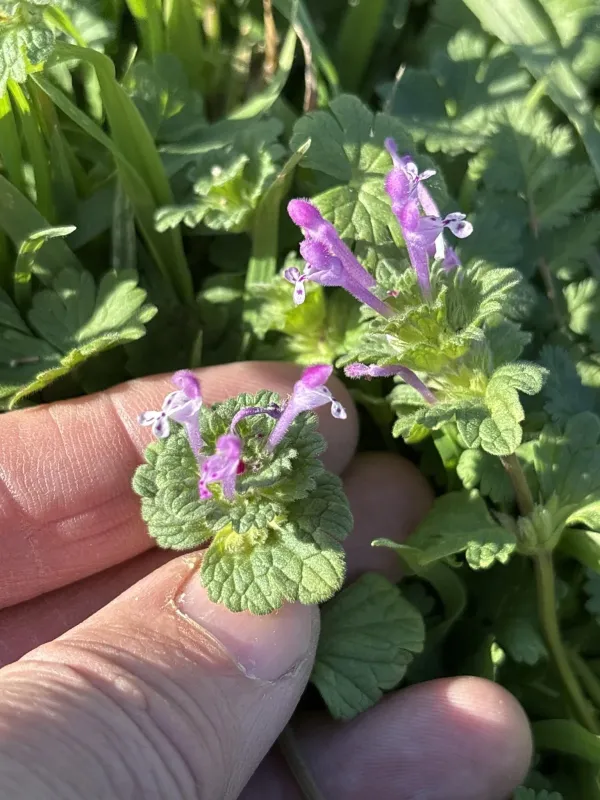
Henbit deadnettle (Lamium amplexicaule) is an annual plant in the Lamiaceae family. It is widely recognized by its square stems and small, pink-to-purple flowers.
The leaves are rounded and have a scalloped edge. The most distinctive trait is the upper leaves, which are sessile and wrap around the stem, giving the plant its name.
It typically grows to a height of 10 to 30 centimeters. The plant produces many small nutlets, and a single plant can produce a significant seed bank for future seasons.
The root system is shallow and fibrous, allowing it to easily colonize cultivated fields, gardens, and lawns during the cooler months of the year.
It is a winter annual, meaning it germinates in late autumn or early spring, grows through the winter, and flowers in early spring, often before many crops start.
Where it grows
Henbit is a common weed in winter crops, gardens, and vineyards. It thrives in soils that are rich in organic matter and have high moisture levels.
It is frequently found in disturbed soil, such as roadsides and uncultivated fields, acting as a pioneer species that prepares the ground for other weeds.
Harm it causes
Henbit competes with young crops for essential nutrients and sunlight. Its early spring growth allows it to gain a head start over many economic crops.
The weed acts as an alternative host for various crop diseases and pests, including aphids and nematodes, which can then spread to sensitive vegetable crops.
In high concentrations, it interferes with seedling development, resulting in reduced plant vigor and lower yields at harvest time.
How to control
Mechanical control is effective in the early stages. Cultivation or hoeing before the plant sets seeds is the best way to prevent long-term infestation.
Cultural practices, such as using cover crops or mulching, help to suppress henbit growth by physically blocking light and creating a barrier for germination.
Chemical control involving pre-emergence or post-emergence herbicides is commonly used in commercial farming to manage large infestations in crops.
It is crucial to spray herbicides while the plants are small and actively growing, as larger, mature plants show higher tolerance to many standard treatments.
Integrated weed management, combining crop rotation and precise herbicide application, remains the most sustainable method for long-term field maintenance.
Content graph
Connections · Henbit deadnettle
Most often together:
Marketplace
Products · 9


Tent
China National Chemical Construction Ningbo Import & Export Co.
Herbicides
0
0
·
61
No offers
—
Details


Biology
Taxonomy
- Latin name
- Lamium amplexicaule
- Family
- Однолетние двудольные сорняки