
Hygrophila lacustris
Hygrophila lacustris
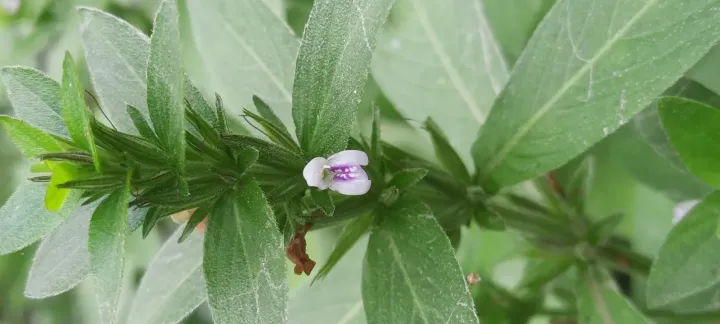
Description
How to tell it apart
Hygrophila lacustris is a perennial herbaceous plant belonging to the Acanthaceae family, often found in wetlands and shallow water habitats.
It exhibits a flexible growth habit, characterized by erect or creeping stems that readily produce roots at the nodes when in contact with damp soil.
The leaves are typically lanceolate, arranged oppositely along the stem, with smooth margins and a pointed apex, which are identifying features for this species.
Small, axillary flowers appear in the leaf nodes, usually white or pale purple, depending on the environmental light levels and hydration state of the plant.
The root system is robust and fibrous, allowing the plant to anchor effectively in muddy substrates and thrive in high-moisture agricultural environments.
Where it grows
The native distribution of this species spans tropical and subtropical regions, where it colonizes marshes, riverbanks, and stagnant water bodies.
In agriculture, it is primarily categorized as a weed in flooded crops, most notably rice, where it takes advantage of the aquatic environment to establish dominance.
The plant thrives in nutrient-rich silt and clay soils, where it can quickly outcompete native or less aggressive vegetation for space and resources.
It is frequently observed in irrigation canals and drainage ditches, where it contributes to water flow obstruction through the formation of dense mats.
Its invasive potential is bolstered by the easy dispersal of stem fragments via irrigation water, facilitating its spread across large agricultural areas.
Harm it causes
The primary damage caused by Hygrophila lacustris stems from intense competition with crops for sunlight, water, and essential soil nutrients.
In rice paddies, the plant creates thick carpets that stifle seedling growth, leading to reduced stand density and significantly lower yields at harvest time.
Mechanical operations such as weeding and irrigation management are severely hindered by the presence of dense, root-entangled vegetation that clogs equipment.
The blockage of irrigation systems by the weed leads to unequal water distribution across the field, causing localized drought or flooding in crop sectors.
Furthermore, the species may act as a habitat for secondary pests and pathogens that can spread to cultivated crops, increasing the need for chemical inputs.
How to control
Agrotechnical management involves strict field leveling and controlled water management, including periods of dry cultivation to desiccate the root systems.
Regular maintenance and dredging of irrigation canals are essential to prevent the accumulation of biomass and to restrict the further spread of the weed.
Chemical control strategies utilize registered selective herbicides that are safe for rice production but effective against broadleaf aquatic weeds.
Implementing crop rotation practices that include non-flooded periods significantly reduces the seed bank and vegetative regrowth potential of the weed.
- Monitor irrigation systems to detect early colonization by the weed.
- Clean machinery thoroughly when moving from infested to clean fields.
- Apply systemic herbicides during the early stages of plant development.
Taxonomy
- Latin name
- Hygrophila lacustris
- Family
- Прочие
- EPPO code
- HYGLC