
Geraldton carnation spurge
Euphorbia terracina
Description
How to tell it apart
Geraldton carnation spurge (Euphorbia terracina) is a member of the Euphorbiaceae family. It is a herbaceous plant that can exhibit either an annual or short-lived perennial life cycle.
The stems are erect, branching from the base, and can grow to heights between 20 and 80 centimeters. The leaves are linear-lanceolate in shape and arranged alternately along the stem.
A distinctive feature of this plant is the presence of a thick, milky white latex found in all its tissues. This latex is known to be irritating to the skin and mucous membranes.
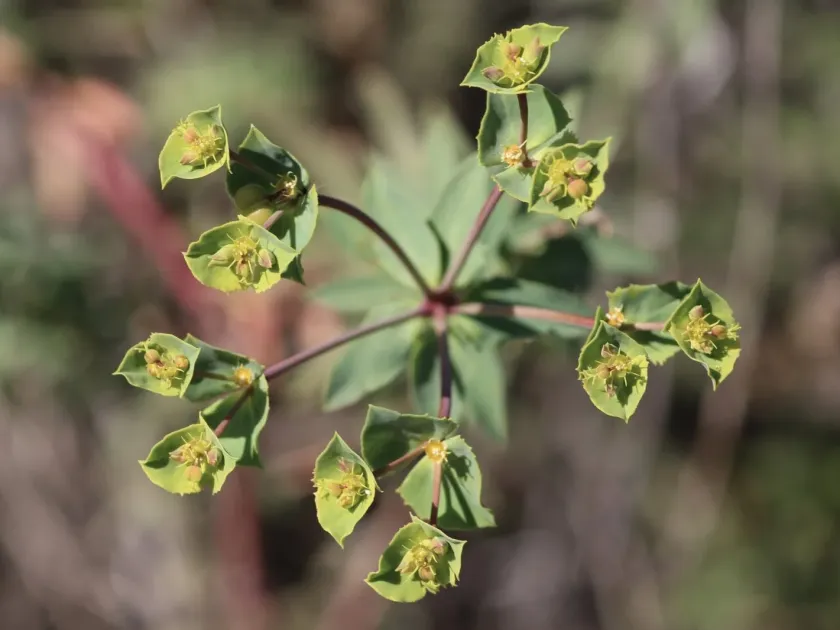
The inflorescence consists of umbel-like structures typical of the genus Euphorbia, surrounded by yellow-green bracts that provide a striking appearance during the flowering season.
The fruit is a three-lobed capsule that tends to dehisce explosively upon maturity, facilitating the spread of seeds over a wide area near the parent plant.
Where it grows
This weed thrives in sandy soils, coastal dunes, and rocky terrain. It is particularly well-adapted to Mediterranean climates and can withstand significant soil salinity.
It frequently colonizes agricultural lands, including grain fields, vineyards, and abandoned pastures, where it competes aggressively for space and light.
The plant demonstrates remarkable ability to invade disturbed areas, quickly establishing dense populations that outcompete native grasses and smaller plant species.
On farm sites, Geraldton carnation spurge often spreads from borders and fencerows into the heart of the fields, benefiting from the nutrient-rich environment of crop systems.
Due to its drought tolerance, it can survive and grow in conditions where other weeds would perish, making it a persistent problem in arid agricultural regions.
Harm it causes
The primary damage caused by this weed is its intense competition with crops for limited water and soil nutrients, which leads to a direct reduction in agricultural yield.
During the early growth stages, the rapid development of the weed shades the crop seedlings, hindering their photosynthetic activity and overall vigor.
The latex contained within the plant is toxic to livestock. Contamination of hay or grazing land with this species can lead to severe health issues in animals consuming the biomass.
Invasive populations of the weed complicate harvesting processes by clogging machinery and increasing the impurity level of the final grain harvest.
Furthermore, it serves as a host for various agricultural pests and pathogens, increasing the overall phytosanitary burden on the affected farming operation.
How to control
Controlling Geraldton carnation spurge requires a strategic combination of mechanical and chemical practices to exhaust the seed bank and prevent new infestations.
Deep cultivation and plowing are essential to disrupt the root system and bury seeds to depths where they are less likely to successfully germinate.
Systemic herbicides, particularly those based on glyphosate or selective broadleaf formulations, are highly effective when applied during the active growth phase of the weed.
- Mowing before seed production to prevent the addition of seeds to the soil.
- Implementation of diverse crop rotations to disrupt the weed's life cycle.
- Spot-spraying or manual removal of individuals on field edges to prevent expansion.
Ongoing monitoring is crucial to ensure that any regrowth or new seedlings are managed immediately, as the plant can rapidly re-establish from persistent seed banks.
Taxonomy
- Latin name
- Euphorbia terracina
- Family
- Молочайные
- EPPO code
- EPHTE