
Painted spurge
Euphorbia heterophylla
Description
How to tell it apart
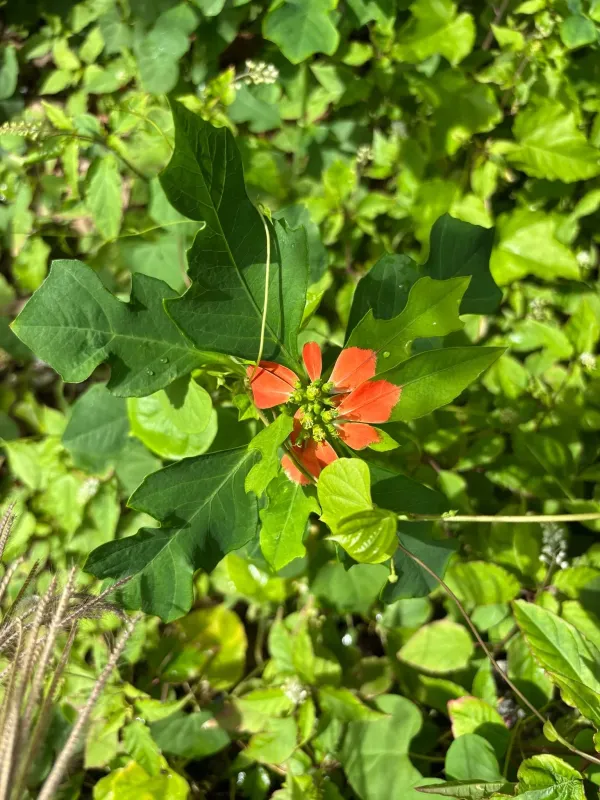
Painted spurge, known scientifically as Euphorbia heterophylla, is an annual herbaceous weed belonging to the Euphorbiaceae family. It is easily identified by its highly variable leaf shapes, which range from fiddle-shaped to lanceolate on the same plant.
Like other members of the spurge family, this plant produces a milky, latex-like sap when the stem or leaves are injured or broken. This sap can be irritating to the skin and indicates the presence of the weed.
The stems are erect, usually branched, and can reach heights between 30 and 80 centimeters. They are typically covered with fine, short hairs, giving them a slightly fuzzy appearance.
The inflorescences are inconspicuous, consisting of small flowers surrounded by greenish-white or reddish-tinged bracts. These bracts are often mistaken for flower petals during the reproductive phase.
The seeds are small, rounded, and greyish-brown. One plant can produce several thousand seeds, which have a hard seed coat, allowing them to remain dormant in the soil for several years before germinating.
Where it grows
This weed is a significant problem in row crops, particularly in soybeans, corn, sunflowers, and cotton. It thrives in well-lit, disturbed areas where competition is relatively low in the early growth stages.
Painted spurge is highly adaptable to various soil types, ranging from sandy loams to heavier clays. It is commonly found in agricultural fields, pastures, and along road verges.
Because it is an opportunistic species, it often colonizes fields following improper crop management, such as failing to perform timely inter-row cultivation or using ineffective herbicide programs.
It prefers warm, sunny conditions and is particularly invasive in regions with long growing seasons, where it can complete multiple life cycles if conditions are favorable.
Its ability to spread through agricultural machinery makes it a global concern, as seeds are easily transported between fields on farm equipment during cultivation and harvest.
Harm it causes
The primary damage caused by Euphorbia heterophylla is its intense competition with crops for water, sunlight, and soil nutrients. Due to its rapid growth rate, it often overtops crops, limiting their photosynthetic capacity.
If left uncontrolled, the weed can significantly reduce crop yield and quality. In severe infestations, the sheer density of the weed can lead to total crop failure in specific sections of the field.
The milky sap produced by the plant can interfere with harvesting operations, clogging combine harvesters and other machinery. It also creates a hazard for field workers during manual tasks.
Painted spurge acts as a host for various agricultural pests and viruses. By providing a refuge for these organisms, it increases the overall disease pressure on the primary crop.
Furthermore, the presence of spurge seeds in harvested grain can result in dockage or rejection at delivery points, reducing the profitability of the agricultural enterprise.
How to control
Effective management requires an integrated approach. Crop rotation is essential to break the life cycle of the weed and to allow for different herbicide chemistries to be used in successive years.
Mechanical control, such as thorough tillage before planting and timely inter-row cultivation, is effective in reducing the initial weed population and exhausting the seed bank in the soil.
Chemical control is often necessary for large infestations. However, Painted spurge is known to develop resistance to certain herbicide modes of action, making the use of diverse chemical programs critical.
Herbicide applications must be timed to target the weed while it is in the seedling stage, typically before it reaches the four-leaf stage, to ensure maximum efficacy and prevent early competition.
- Maintain field sanitation to prevent the introduction of new seeds.
- Rotate crops to disrupt growth cycles and enable varied herbicide regimes.
- Use pre-emergence and post-emergence herbicides in sequence for layered protection.
Taxonomy
- Latin name
- Euphorbia heterophylla
- Family
- Молочайные
- EPPO code
- EPHHL