
Cuphea viscosissima
Cuphea viscosissima
Description
How to tell it apart
Cuphea viscosissima, commonly known as blue waxweed or sticky cuphea, is an annual herb belonging to the Lythraceae family.
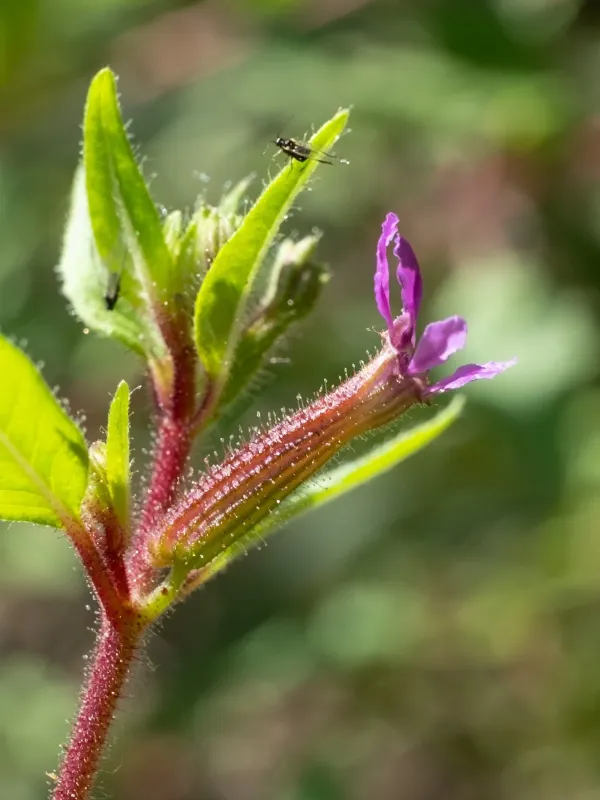
The plant is distinguished by its sticky, glandular hairs covering the stems and leaves, which trap small particles and give the plant its specific texture.
Leaves are arranged oppositely along the stem and have a lanceolate shape, typically appearing dull green with a slightly rough surface.
Its flowers are solitary, small, and purple-pink, blooming in the leaf axils, which makes the plant easily recognizable during the mid-summer growth stage.
The root system is a taproot that allows the plant to anchor firmly in the soil and compete successfully for nutrients in various soil conditions.
Where it grows
Blue waxweed is native to North America and is frequently found in agricultural fields, pastures, and disturbed soil areas.
It is particularly problematic in row crops like soybeans and corn, where it takes advantage of open spaces between crop rows to proliferate.
The plant thrives in full sun and well-drained soils, often appearing in areas where crop canopy closure is delayed or incomplete.
It can establish itself rapidly in fields utilizing no-till or reduced tillage practices, where surface soil remains undisturbed during early spring.
The seeds are easily transported by farm equipment, water runoff, and animals, facilitating the spread of the weed across large agricultural landscapes.
Harm it causes
The primary damage caused by Cuphea viscosissima is its aggressive competition with crop plants for water, sunlight, and essential soil nutrients.
High infestations can lead to significant yield reductions, especially if the weed emerges shortly after the crop and establishes dominance in the early growth stages.
The sticky nature of the plant stems can clog agricultural machinery, causing downtime during cultivation and harvesting operations.
It serves as an alternative host for various pests and diseases, increasing the overall phytosanitary risk for adjacent commercial crop fields.
Contamination of harvested grain with blue waxweed seeds can lower the quality of the product, potentially leading to price penalties at the market.
How to control
Mechanical control involves thorough tillage operations that bury the seeds and uproot the seedlings before they reach the reproductive stage.
Effective crop management, such as optimal seeding rates and row spacing, helps the crop canopy close faster, suppressing blue waxweed growth.
Chemical control requires the use of appropriate post-emergence herbicides, ideally timed when the weeds are in the seedling or vegetative state.
- Early application of herbicides before the weed reaches maturity.
- Use of multi-mode-of-action herbicides to manage potential resistance.
- Integrating mechanical inter-row cultivation with chemical applications.
Regular scouting of fields is essential to determine the best window for treatment, ensuring that Cuphea viscosissima is managed before it sets seeds.
Taxonomy
- Latin name
- Cuphea viscosissima
- Family
- Дербенниковые
- EPPO code
- CPHPE