
Ammannia baccifera
Ammannia baccifera
Description
How to tell it apart
Ammannia baccifera is an annual herbaceous plant belonging to the Lythraceae family. It is a moisture-loving weed that thrives in wet environments and is commonly known for its adaptability to flood-prone areas.
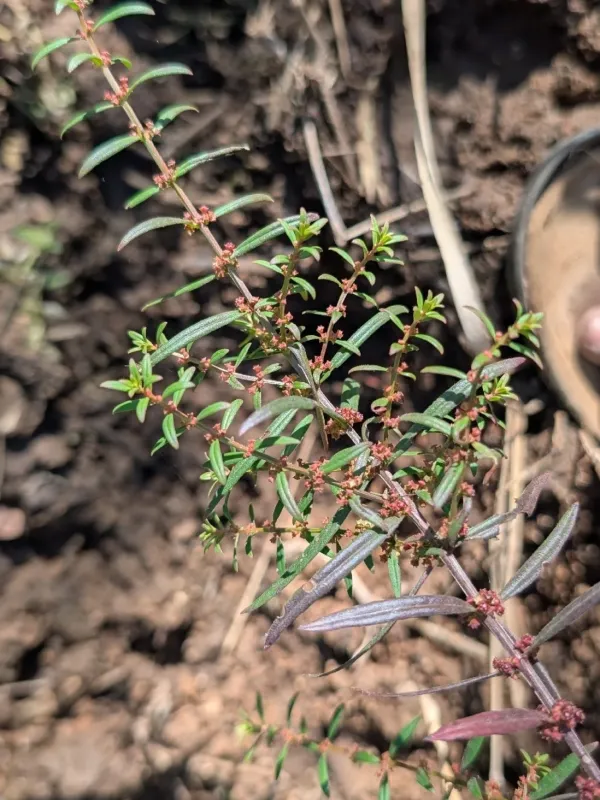
The plant typically grows to a height of 10 to 40 cm, featuring stems that can be either erect or prostrate. Its leaves are opposite and linear-lanceolate, giving it a distinct appearance in wet habitats.
It produces small, inconspicuous flowers in axillary clusters. The fruit is a globose capsule that releases numerous tiny seeds, ensuring efficient propagation across flooded fields.
The root system is fibrous and shallow, allowing the plant to rapidly extract nutrients from the mud. This characteristic makes it highly competitive in the early stages of rice development.
Ammannia baccifera is morphologically variable, which helps it survive different light and water conditions, making it a persistent challenge for agricultural maintenance teams worldwide.
Where it grows
This weed is predominantly found in rice-growing regions across Asia, Africa, and parts of Southern Europe. It favors silty and clay-rich soils typical of paddy fields and irrigation channels.
It flourishes in habitats with stagnant water. Because it is highly resistant to waterlogging, it often dominates areas where other weed species fail to survive during the flood phase of rice cultivation.
Irrigation systems act as the primary vector for seed dispersal. Since the seeds are lightweight and water-buoyant, they travel easily through canals, infesting large areas of crop land within a single season.
The weed frequently appears in patches where the crop stand is thin or uneven. Once established, it can form dense colonies that are difficult to manage without systematic intervention.
Maintaining clean irrigation infrastructure is essential to prevent the spread of this species. Even in well-managed farms, any standing water can lead to the rapid colonization of Ammannia baccifera.
Harm it causes
The primary damage caused by Ammannia baccifera is the direct competition for space, nutrients, and sunlight with rice plants. Its fast growth rate allows it to quickly canopy over young crops.
By consuming nitrogen and other essential nutrients, it significantly reduces the rice plant's tillering capacity and vigor, leading to lower grain yields and reduced plant height at maturity.
The plant acts as an alternative host for various pests and diseases. This facilitates the transmission of pathogens into rice fields, necessitating additional pesticide applications for disease control.
During the harvest, high density of this weed interferes with mechanical equipment operation. The moisture content of the weed biomass increases the drying time required for the harvested grain.
Grain quality is often downgraded due to the presence of weed seeds in the harvest. Producers must invest in extra cleaning and sorting processes to meet market quality standards.
How to control
Effective cultural control includes crop rotation, which breaks the life cycle of the weed by introducing dry-land cultivation methods that are lethal to Ammannia baccifera.
Proper land leveling is a critical strategy to ensure uniform water depth. Minimizing stagnant pools within the field restricts the ideal germination conditions required by this species.
Chemical control involving the use of selective herbicides is the most common approach for large-scale rice production. Sulfonylureas and other systemic herbicides are effective when applied at the right growth stage.
Scouting is vital for early detection. Targeted applications of herbicides on localized patches can save time and reduce the total amount of chemicals applied across the entire field.
Integrated pest management, combining mechanical weeding with timely herbicide usage and water management, is the only reliable way to keep populations of this weed below the economic injury level.
Taxonomy
- Latin name
- Ammannia baccifera
- Family
- Дербенниковые
- EPPO code
- AMMBA