
Cuphea carthagenensis
Cuphea carthagenensis
Description
How to tell it apart
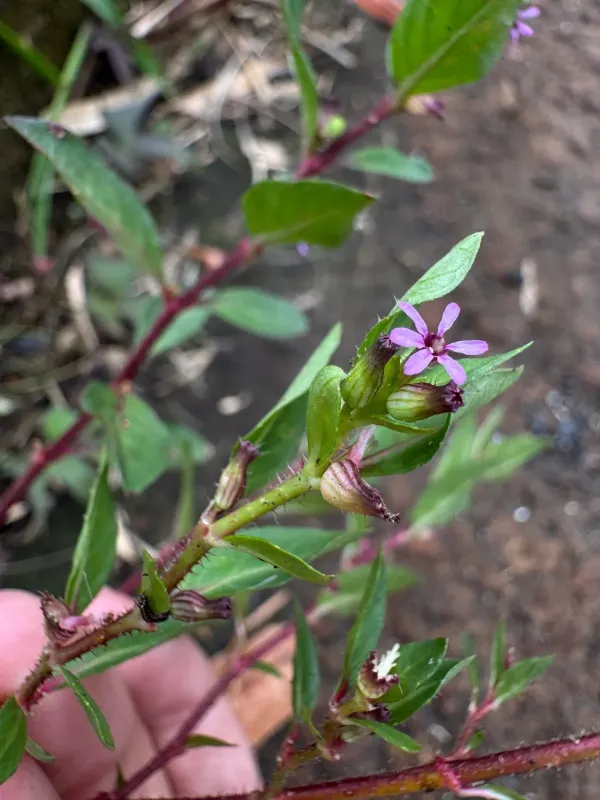
Cuphea carthagenensis, commonly known as Colombian waxweed, belongs to the Lythraceae family. It is an annual herbaceous plant characterized by an upright or ascending stem that typically reaches heights of 60–80 centimeters.
The leaves are opposite, lanceolate to elliptical in shape, and possess short petioles. A key distinguishing feature is the glandular pubescence found on both stems and foliage, which makes the plant feel sticky to the touch.
The flowers are small and solitary, emerging from the leaf axils. The calyx is tubular, often displaying shades of green or red, which serves as a vital diagnostic characteristic for field identification.
The root system is a well-developed taproot, allowing the plant to draw water efficiently from deeper soil layers, contributing to its survival during short dry spells.
The seeds are distinctively shaped and are easily dispersed by wind, water runoff, and agricultural machinery, facilitating rapid colonization of new agricultural and natural environments.
Where it grows
This species thrives in moist, warm conditions. It is commonly found in wetlands, near water bodies, drainage ditches, rice paddies, and low-lying areas with high soil moisture content.
In agricultural settings, Cuphea carthagenensis frequently invades row crops such as soybeans, corn, and cotton, particularly in regions with regular irrigation or sufficient rainfall.
The weed demonstrates significant adaptability to various soil types, ranging from clay-heavy soils to loamy substrates, provided there is adequate nutrient availability to support its growth.
Anthropogenic activities, including irrigation management and the movement of equipment, play a major role in spreading the weed across farmland and establishing permanent populations.
Native to tropical and subtropical regions of the Americas, the species has become naturalized in several other parts of the world, effectively colonizing ecological niches that mimic its native range.
Harm it causes
The primary damage caused by Cuphea carthagenensis is its intense competition with crops for essential resources such as light, moisture, and nitrogen, which directly stunts crop development.
Due to its rapid growth rate, the weed can quickly overshadow young crop seedlings, leading to reduced stand density and a significant decline in potential harvest yields.
The plant's presence complicates routine field management activities like mechanical weeding or chemical applications, as its dense vegetative growth creates physical barriers.
At harvest, the weed often becomes mixed with the harvested crop, increasing moisture levels in the grain and resulting in higher post-harvest drying costs for producers.
Additionally, Cuphea carthagenensis can serve as an alternative host for various plant pathogens and insect pests, increasing the risk of disease spread within the agricultural ecosystem.
How to control
Mechanical control measures include regular tillage operations, such as disking or plowing, designed to uproot and destroy seedlings before they reach the reproductive stage.
Crop rotation strategies that utilize high-density canopy crops can effectively shade out Cuphea carthagenensis, as it requires ample light to grow and complete its life cycle.
Chemical control involving selective systemic herbicides is a standard practice for managing established infestations in sensitive crops, provided they are applied during the early growth stages.
Integrated weed management must prioritize the use of clean, certified seeds and strict equipment cleaning protocols to prevent the introduction of new weed seeds into non-infested fields.
- Regular mowing of field edges and surrounding infrastructure.
- Application of pre-emergent herbicides to suppress seed germination.
- Timely inter-row cultivation in row crops to disrupt weed development.
Taxonomy
- Latin name
- Cuphea carthagenensis
- Family
- Дербенниковые
- EPPO code
- CPHCA