
Virginia dayflower
Commelina virginica
Description
How to tell it apart
Virginia dayflower (Commelina virginica) is a perennial herbaceous plant belonging to the Commelinaceae family, known for its rapid spread and persistence.
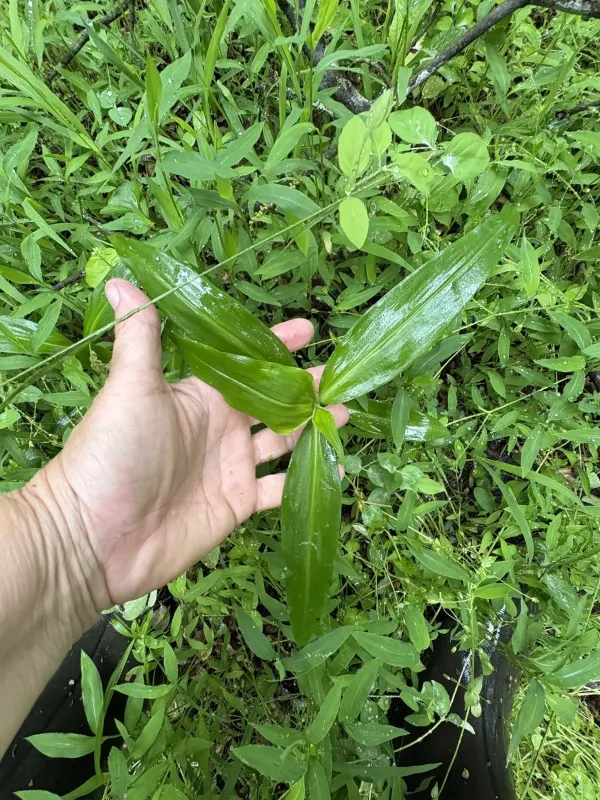
The plant is characterized by lanceolate leaves and bright blue flowers featuring three petals, which are typically found within a specialized spathe.
Stems are often sprawling and succulent; they have the ability to root at the nodes when they touch moist soil, making mechanical removal very difficult.
The root system consists of robust rhizomes that store nutrients, allowing the plant to regenerate effectively even after being cut or damaged.
Its growth habit allows it to form dense mats in the field, which can quickly outcompete young crops for light and space during critical development stages.
Where it grows
This weed prefers moist, nutrient-rich soils and is frequently found in irrigated crop fields, along ditch banks, and in low-lying areas of agricultural land.
It thrives in warm climates and is particularly problematic in row crops like soybeans, corn, and cotton where conditions are favorable for its development.
Dissemination occurs via both seeds and vegetative rhizome fragments that are easily moved between fields by cultivation equipment.
The plant has high ecological plasticity, enabling it to adapt to various soil types as long as moisture levels remain relatively high throughout the season.
Presence of this species is often an indicator of poorly drained or frequently irrigated land, where it can easily establish permanent colonies.
Harm it causes
The primary damage is caused by aggressive resource competition, as the weed rapidly consumes water and soil nutrients meant for the primary crop.
Large colonies of Virginia dayflower create significant shading, which inhibits the photosynthesis of crop plants and leads to stunted growth and lower biomass.
The weed acts as an alternative host for various plant viruses and fungal diseases, facilitating the spread of pathogens to surrounding agricultural fields.
Harvesting operations are frequently hindered because the sprawling stems of the plant interfere with machinery, clogging intake areas and slowing progress.
Additionally, the presence of plant debris in the final harvest reduces the quality and market value of the commodity, often requiring extra cleaning.
How to control
A successful management strategy involves a combination of deep tillage to disrupt rhizomes and proactive field sanitation to limit spread.
In-crop mechanical cultivation must be performed early and frequently before the weed has the chance to establish roots at the stem nodes.
Chemical control focuses on the use of effective post-emergence and pre-emergence herbicides, ensuring the correct timing for maximum efficacy.
- Integrated weed management programs.
- Systemic herbicide applications at early growth stages.
- Maintaining clean equipment to prevent vegetative propagation.
Monitoring fields closely during the early season is essential for early detection and targeted interventions before large infestations occur.
Taxonomy
- Latin name
- Commelina virginica
- Family
- Коммелиновые
- EPPO code
- COMVI