
Boerhavia diffusa
Boerhavia diffusa
Description
How to tell it apart
Boerhavia diffusa, commonly known as punarnava in some regions, is a perennial herb belonging to the Nyctaginaceae family. It is a persistent weed characterized by its sprawling growth habit.
The plant features stems that are heavily branched and often spread horizontally across the ground, forming dense mats that can easily outcompete shorter crop varieties.
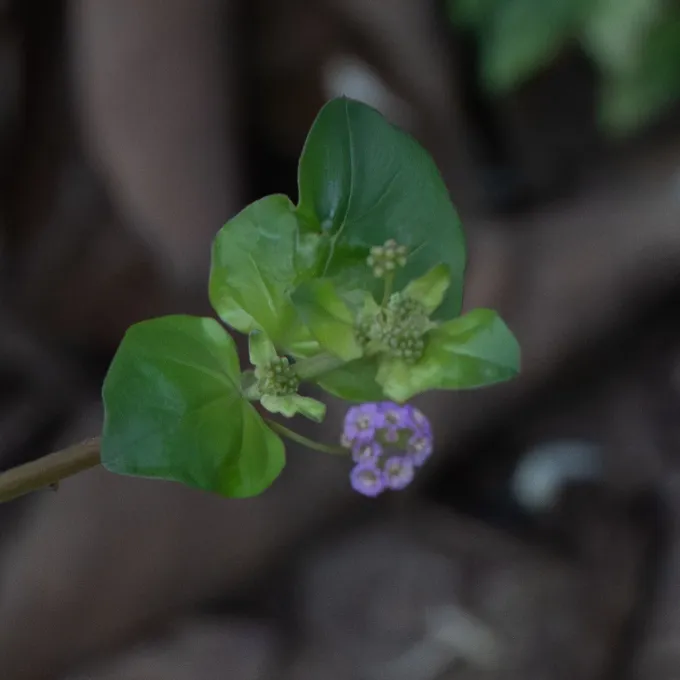
Leaves are opposite, typically unequal in size, and ovate in shape. This foliage often provides significant ground cover, retaining soil moisture and suppressing the growth of neighboring plants.
The flowers are small, arranged in panicles, and exhibit pink to purple hues. They are primarily distinguished by their sticky glands, which adhere to surfaces, facilitating wide seed dispersal.
A thick, woody taproot system allows the plant to survive in harsh environmental conditions, making it particularly difficult to remove through manual weeding once established.
Where it grows
Boerhavia diffusa is highly adapted to tropical and subtropical climates, thriving in disturbed soils, roadsides, and cultivated fields where it acts as a significant weed.
It prefers well-drained soils but shows high tolerance for various soil types, enabling it to spread rapidly across diverse agricultural landscapes and abandoned lands.
In irrigation-dependent farming systems, the plant takes advantage of constant moisture, growing aggressively throughout the season and quickly colonizing the inter-row spaces of crops.
The weed is frequently introduced into new areas via agricultural machinery, animal movement, and contaminated seeds, highlighting the importance of farm biosecurity measures.
Due to its high adaptability, it can be found in various environments, from backyard gardens to large-scale commercial cereal, legume, and vegetable plantations.
Harm it causes
The primary damage caused by Boerhavia diffusa is through direct resource competition, as it aggressively depletes water and soil nutrients required for optimal crop development.
By forming dense mats, the weed stunts the growth of young crop plants, leading to uneven crop stands and a significant reduction in overall harvest quality and quantity.
It serves as an alternative host for several viral and fungal pathogens, which can then be transmitted to crops by insects, leading to widespread disease outbreaks in the field.
The sticky nature of its seeds often leads to the contamination of harvested grain, necessitating intensive cleaning processes that increase operational costs for farmers.
Its presence also complicates mechanical farm operations, as the resilient stems can get tangled in equipment, reducing the efficiency of field maintenance tasks.
How to control
Mechanical control, such as deep plowing, is essential for disrupting the taproot system and preventing the regrowth of the plant from its underground storage organs.
Integrated weed management programs suggest the use of cover crops that grow quickly and shade the soil, significantly reducing the germination rates of Boerhavia diffusa seeds.
Regular inter-row cultivation and manual hand-pulling before the plant sets seeds are highly effective strategies to contain the weed population in vegetable and orchard crops.
Chemical control involves the application of selective systemic herbicides that effectively target the plant's vascular system, ensuring full eradication of both foliage and roots.
Prevention remains the most effective strategy, involving the thorough cleaning of equipment moving between fields and ensuring the use of certified, weed-free seed stocks.
Taxonomy
- Latin name
- Boerhavia diffusa
- Family
- Никтагиновые
- EPPO code
- BOEDI