Description
Mode of action
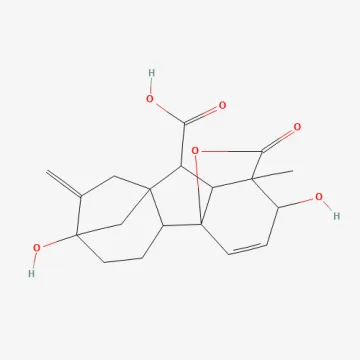
Gibberellins are a large group of natural diterpene-based plant hormones that play a crucial role in regulating the physiological processes of plant development.
The primary mechanism of their action involves activating the synthesis of specific enzymes that break down growth inhibitors in cells, thereby triggering processes of stem and leaf elongation.
At the molecular level, gibberellins remove repression from transcription factors, allowing the plant to transition from a dormant state to active growth, seed germination, and the formation of reproductive organs.
These substances affect carbohydrate metabolism by stimulating the mobilization of stored nutrients from the endosperm of the seed to the embryo, which is vital for achieving uniform seedling emergence.
An important feature of this group is their ability to influence tissue differentiation, stimulating the formation of male flowers and impacting fruit development, which is actively used in intensive agriculture.
What it targets
Gibberellin-based products are used in crop production not against pests or weeds, but for the targeted modification of morphology and the biological cycles of cultivated plants.
They are utilized to accelerate the germination of seeds with a deep dormancy period and to stimulate the vegetative mass growth in vegetable and fruit crops.
In viticulture, this group is used to increase berry size, improve their market quality, and form looser grape clusters, which reduces the risk of rot.
The application of gibberellins is effective for increasing yields when growing greenhouse tomatoes, cucumbers, and eggplants, especially under low-light conditions.
- Stimulation of fruit setting under unfavorable weather conditions.
- Acceleration of seedling and shoot development rates.
- Overcoming genetic dwarfism in certain varieties.
- Increasing the length of flower stalks in ornamental gardening.
Rates and timing
Application rates for gibberellins vary significantly depending on the crop type, growth stage, and specific agronomic objective, typically ranging from a few milligrams to grams of active ingredient per hectare.
Applications are carried out strictly during active growth or flowering phases, as plant hormones have a well-defined efficiency window after which their impact on plant metabolism decreases sharply.
It is important to consider that excessive concentrations can lead to undesirable consequences: excessive internode elongation, stem lodging, and a weakened general immunity of the plant against diseases.
Solutions should be prepared immediately before use, as the active substance can degrade due to ultraviolet exposure or prolonged storage in a diluted form.
It is recommended to spray during morning or evening hours with moderate air humidity to ensure optimal absorption of the preparation by leaf tissues and to minimize evaporation.
Restrictions
A primary limitation is strict adherence to temperature conditions: at very low temperatures, the efficiency of gibberellins drops, while high temperatures can cause leaf blade burns.
It is not recommended to use these preparations on weakened or pest-damaged plants, as growth stimulation requires high energy expenditure and a high level of mineral nutrition.
It is necessary to avoid large amounts of working solutions reaching the soil, as this can disrupt the microbiological balance in the root zone.
When working with gibberellins, personal protective equipment should be used, avoiding contact with skin and mucous membranes, regardless of their natural origin.
Storage of the preparations must be in a cool, dark place, away from food and animal feed, in accordance with the regulations for handling agrochemicals.
Regulatory
Status in the European Union
Approved in the EU
- CAS number
- several - see remark
- Category (EU)
- PG - Plant growth regulator
- Approved from
- 01.01.2026
- Approval until
- 31.12.2040
- ADI
- 0.33 mg/kg bw/day
- ARfD
- 0.33 mg/kg bw
- AOEL
- 0.09 mg/kg bw/day
EU status is for reference only and does not replace national registration in your country.
Content graph
Connections · Gibberellins
Most often together:
Marketplace
Products · 19


PHOENIX NUTRIENS, r., liquid complex fertilizer
AGROINDICATOR, LLC
Fertilizers
0
0
·
63
1 offer
0.73 €per 1 kg
Buy

Guliver
На замовлення ТОВ «Компанія «Укравіт» (Україна)ТОВ «Фабрика Агрохімікатів» (Україна
Plant Growth Regulators
0
0
·
62
9 offers
0.63 €per 1 l
Buy

AgriFlex (AgriFlex)
ЧЕНГДУ НЬЮСАН КРОП САЙЄНС КО. ЛТД(Chengdu newsun crop science co.,ltd.), Китай
Fertilizers
0
0
·
60
2 offers
5.25 €per 1 kg
Buy

PLANT GROWTH REGULATOR SENIOR TOMATO
Agrochemical Factory, LLC
Plant Growth Regulators
0
0
·
59
2 offers
6.59 €per 1 l
Buy

MAX Cisealer/Cimax/Max Algotech
XI’AN CITYMAX AGROCHEMICAL CO., LTD, Китай
Fertilizers
0
0
·
50
11 offers
21.42 €per 1 kg
Buy
MAXICROP MS
Валагро (Valagro SpA), Італія
Plant Growth Regulators
0
0
·
43
2 offers
33.7 €per 1 l
Buy