
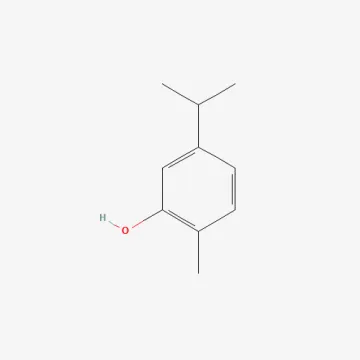
Carvacrol
Description
Mode of action
Carvacrol belongs to the class of monoterpenic phenols and is a key active component of essential oils found in many aromatic plants, such as oregano and thyme.
The substance affects harmful organisms by disrupting the integrity of cell membranes. The lipophilic nature of carvacrol allows it to easily penetrate the lipid layer of pathogen membranes.
As a result of contact with the substance, energy metabolism within fungal and bacterial cells is destabilized, leading to rapid cell death.
In insects, carvacrol exhibits neurotoxic effects by targeting octopaminergic receptors, which induces paralysis and kills the pest.
Due to its high volatility, carvacrol is often utilized as a natural fumigant capable of protecting crops in greenhouse environments.
What it targets
Preparations based on carvacrol are effective against a wide range of phytopathogens, including soil-borne fungi of the genera Fusarium, Pythium, and Rhizoctonia.
As an insecticide, the substance suppresses the activity of various mite species, aphids, and thrips that damage vegetable and ornamental crops.
The agent demonstrates antibacterial activity against pathogens causing soft rots and vascular diseases in plants.
It is used for controlling post-harvest diseases of fruits and vegetables, slowing down mold development during storage.
- Suppression of root rot pathogens.
- Control of pest complexes in greenhouses.
- Disinfection of planting material.
Rates and timing
Application rates for carvacrol vary significantly depending on the formulation and the specific target crop being treated.
When used in biopesticide compositions, treatments are typically performed via spraying at 7–14 day intervals, depending on the severity of the infestation.
In protected cultivation, application by vaporization or ultra-low volume (ULV) spraying is permitted to ensure uniform leaf surface coverage.
For seed treatment, concentrated emulsions are used, where the material is soaked for a specific duration according to the regulatory guidelines.
It is important to note that maximum efficacy is achieved when adhering to recommended temperature ranges, as the volatility of carvacrol is highly temperature-dependent.
Restrictions
The primary limitation is the high sensitivity of certain plant species to concentrated doses of essential oils, which may cause phytotoxic leaf burn.
It is necessary to conduct a preliminary test for phytotoxicity on a small area before applying the product to the entire field.
Due to rapid degradation under sunlight exposure, the frequency of application may be higher compared to synthetic pesticides.
Protective measures for skin and respiratory tract should be strictly followed during application, despite the natural origin of the substance.
Storage of the products must be in a cool, dark place to prevent oxidation and the loss of biological activity of the active component.
Status in the European Union
Pending
- Category (EU)
- OT - Other treatment
EU status is for reference only and does not replace national registration in your country.